


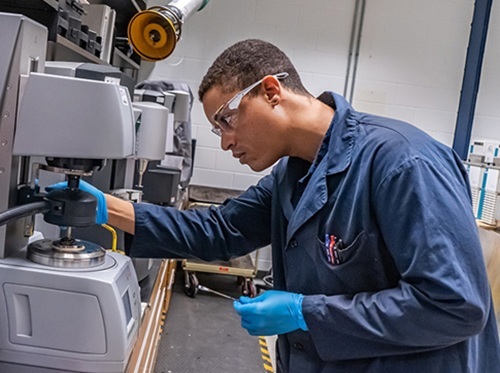
An asphalt testing method developed by the Texas Department of Transportation has become a national standard; a standard that will help improve pavement quality and make roads more durable over time, not just in Texas but across the country.
[Above photo by TxDOT]
Developed by TxDOT and the University of Texas at Austin Center for Transportation Research (CTR), the testing method – called the “poker chip method” and in development and refinement since 2016 – models the stress that asphalt endures on a roadway to check for cracking in the material.
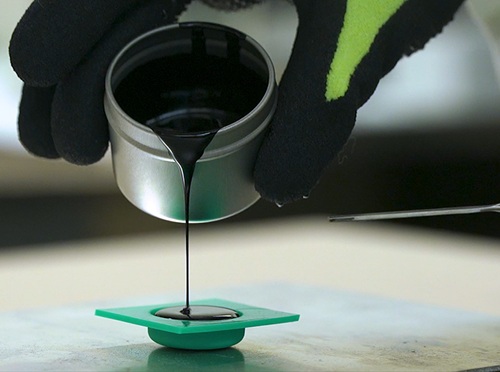
A sample of asphalt binder in the shape and size of a poker chip is sandwiched between two plates and then pulled until the sample cracks or fails.
The method has been adopted by the American Association of State Highway and Transportation Officials as the provisional standard test method to be used nationwide.
[Editor’s note: AASHTO re:source is a technical service program offered by AASHTO that assessed such test methods through three major programs: the Laboratory Assessment Program, the Proficiency Sample Program or PSP, and the AASHTO Accreditation Program or AAP. Additionally, in October 2025, AASHTO re:source updated its Accreditation Program Procedures or AAP Manual; an 18-page guide that presents the Accreditation Program’s processes in a new format that is easier to read and understand.]
TxDOT said it plans to specify this test in the upcoming year and will use it to check the quality of asphalt binders both before and after they are shipped to projects.
“The previous testing methods were developed over 30 years ago, and they simply don’t account for the wide range of modifiers used in today’s asphalt binders,” noted Zahra SotoodehNia, an engineer in TxDOT’s Materials and Tests Division, in a statement.
Asphalt binder is one of the components used to produce hot asphalt mix and seal coats; a material used in large amounts to pave and maintain the more than 200,000 miles TxDOT oversees statewide.
By improving the quality of the binder, the pavement will last longer and be less expensive to maintain over time, she said.
SotoodehNia – who served as a researcher at CTR during the implementation stages of the project – explained that the poker chip test is highly sensitive to both the type and quality of asphalt binder modifiers; meaning it can better predict how long a pavement will last and how well it will resist cracking over time.
“Ultimately, it helps us build roads that are more durable and require less maintenance,” she said. “We hope that with AASHTO’s endorsement, we see more states adopting this method which, could elevate pavement performance nationwide.”
 Nation
TRB Panel Offers ‘Blueprint’ for State DOT Success
January 30, 2026 Nation
