


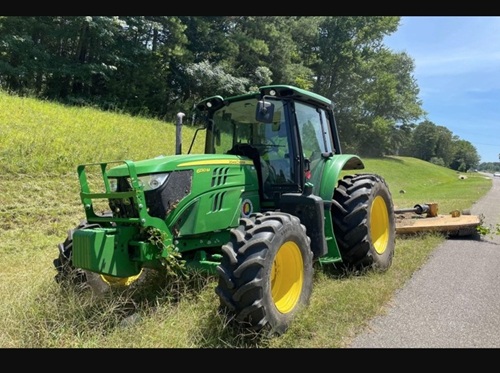
A four-year research project at Auburn University is helping the Alabama Department of Transportation improve management of nearly 30,000 lane-miles of public roadside in more efficient, cost-effective ways by incorporating herbicide as part of an integrated weed management practice.
[Above photo by ALDOT]
ALDOT is responsible for an estimated 243,000 acres of roadside area and the traditional means of weed control for that land is mowing.

However, mowing is an expensive, one-size-fits-all approach – costing by some estimates $50 per acre several times each year, Auburn’s team said. Mowing also exposes road workers to risk by placing them near traffic, and it often is simply ineffective against invasive grasses that regrow quicker than native species, researchers found.
“Our goal was to create practical, research-based recommendations that ALDOT managers can use immediately across Alabama’s highway system,” said David Russell, associate extension professor of weed science at Auburn, in a school news article.
He stressed that this research project “is about safety first and foremost [as] clear views, stable shoulders, and consistent vegetation are critical for drivers and maintenance crews.”
That is why this Auburn-led research sought to determine if targeted herbicide programs, applied at specific times, could outperform traditional methods to provide longer-lasting control, reduce the need for repeated mowing and improve roadside conditions.
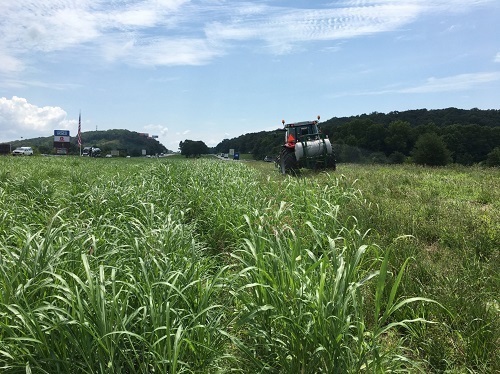
Russell conducted field trials at multiple locations alongside Alabama’s highways, targeting particularly problematic species in common management scenarios. Russell tested herbicide combinations, rates, timing and environmental conditions to identify treatments that delivered consistent control.
He discovered that controlling weeds is as much about the right time as it is the right combination of herbicides. Species such as silver beardgrass and vaseygrass, which have been notoriously difficult to manage, can be controlled for up to two months with the right combination of herbicides, if applied in late summer.
In designated “bareground areas” where vegetation must be removed completely to allow drainage to make roads safely passable, several herbicides were found to render 80 percent of the ground free of vegetation for up to 132 days, Russell’s research team found.
In one case, the team found that fire – often touted as a “natural” management tool – actually caused the spread of the invasive species foxtail by stimulating its dormant seeds to germinate in the absence of a thick, healthy forage stand. The invasive often regrows faster than desirable grasses, choking them out after a fire clears an area.
The strategic application of herbicides also led to better habitats for pollinators like butterflies, Auburn’s team found. Through field-applied research trials, the school’s researchers proved that some native milkweed plant species are tolerant to many commonly-used herbicides along highway rights-of-way.
Furthermore, when not mowed repeatedly, native wildflowers like Rudbeckia were also able to emerge. In addition to protecting against erosion and preventing invasive species from getting a foothold, the flowers are also just nice for motorists to see along the roadside, Russell noted.
Ultimately, while Auburn’s study primarily focused on how to improve roadside weed control, it uncovered other benefits as well, for reducing the frequency of mowing and re-treatment of herbicides can potentially lower long-term maintenance costs, decrease fuel use and reduce the amount of time highway workers are exposed to dangerous traffic.
“This work shows that vegetation management doesn’t have to be a one-size-fits-all approach,” he said. “When we understand how different species behave and how treatments interact with the environment, we can manage roadsides in ways that are safer, more economical and more environmentally responsible.”
 Nation
AASHTO Safety Summit: Engaging the Public in Safety
October 2, 2026 Nation
