


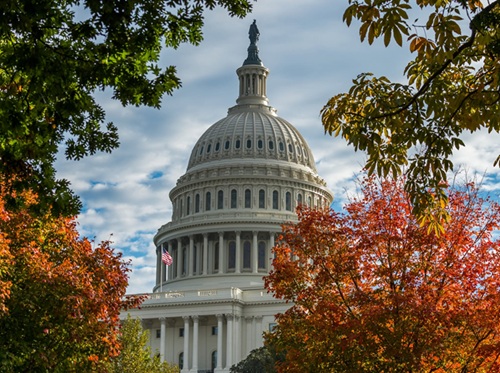
Democrats will regain control of both the U.S. Senate and the U.S. House of Representatives in 2027 following the 2026 mid-term elections on November 3, while they will also control more state governor offices across the country when the new year begins. Meanwhile, voters passed a significant majority of the transportation infrastructure and transit funding measures on the election ballot in 2026.
[Above photo via Architect of the Capitol]
Democrats will control at least 54 seats in the Senate when the 120th Congress is seated on January 3, 2027; gaining seven seats following victories in Maine, Texas, South Carolina, North Carolina, Ohio, Iowa, and Kansas. At press time, the Senate races in Alaska and Mississippi remained too close to call. In the House, Democrats will control at least 243 seats; at press time, the results for 38 of the 435 seats have not yet been called.
At the state level, Democrats picked up five governorships for the states of Nevada, Texas, Georgia, Ohio, and Iowa – with Democrats currently set to control the governor’s mansions in 28 states versus 20 states for Republicans beginning in 2027. At press time, the races for governor of Kansas and Alaska remained undecided.
In terms of transportation referendums, preliminary analysis by the American Road & Transportation Builders Association indicates voters approved 81 percent of the 294 state and local transportation funding measures appearing on mid-term election ballots in 22 states this year. ARTBA pointed out that, since 2017, voters have approved 85.3 percent of 3,300 state and local transportation ballot measures nationwide.
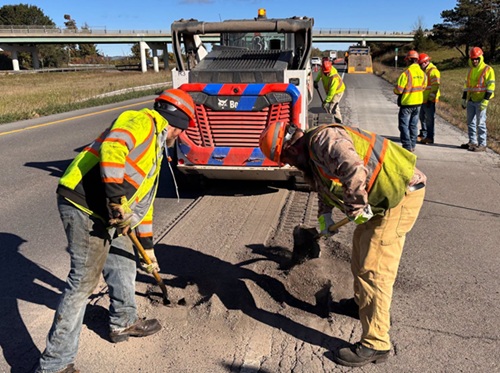
According to ARTBA’s Transportation Investment Advocacy Center (TIAC), those ballot measures should generate an estimated $20.3 billion to maintain and improve transportation infrastructure.
Carolyn Kramer Simons, ARTBA-TIAC senior director of state funding policy, noted that most of those ballot measures renewed existing funding streams that were scheduled to expire, while 23 established new revenue sources to support local projects. She added that some approved funding will become available immediately through bond measures, while ongoing property, sales, and income tax measures allotted for transportation needs will generate revenue for up to 30 years.
“Measures to increase taxes and fees faced significant national political headwinds in this year’s election,” Simons explained. “With affordability and the cost of living weighing heavily on voters, transportation funding was hardly an easy sell. Yet voters still approved over 80 percent of these measures, reinforcing a message we’ve seen consistently over the past decade: Americans recognize that investing in roads, bridges, and public transit systems has a direct impact on their quality of life.”
In terms of transit specifically, analysis by the American Public Transportation Association indicated that 22 of 27 transit ballot measures across the country, most by overwhelming margins; approving $27.4 billion in long-term dedicated funding to support public transportation services and improvements.
“Local measures are the truest gauge of public priorities, and this year’s ballot results send a clear message. Voters across the country are choosing public transit,” said Paul Skoutelas, APTA president and CEO, in a statement. “The 2026 vote is an endorsement of public transportation and an investment in connected communities that work for everyone.”
 Top Stories
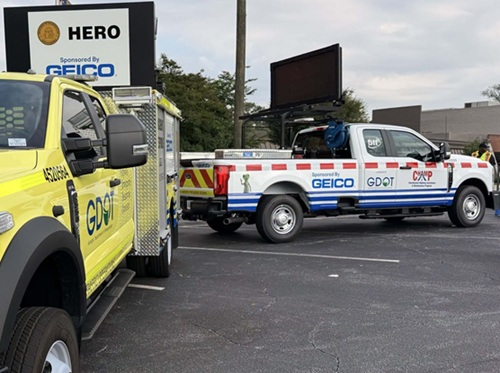
State DOTs Support Crash Responder Safety Week
November 6, 2026 Top Stories
