


The American Association of State Highway and Transportation Officials recently hosted a knowledge session at its 2026 Spring Meeting in Savannah, GA, regarding ways state departments of transportation are trying to lower the cost and effort of maintaining aging infrastructure while also making it more resilient in the future.
[Above photo by AASHTO]
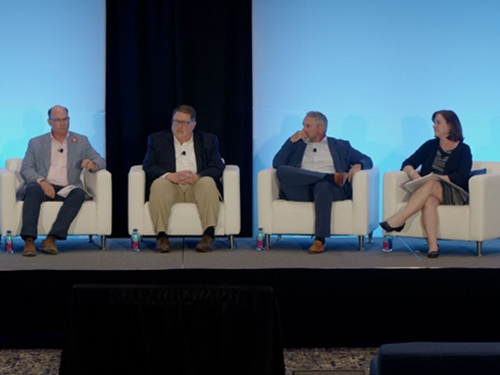
Matt Chynoweth, national bridge group leader at RS&H – the session’s presenter – moderated a panel discussion that featured Carl Johnson, chief engineer for the Texas Department of Transportation; George Conner, deputy director of operations for the Alabama Department of Transportation; Chris Peoples, chief operating officer for the North Carolina Department of Transportation; and Meg Pirkle, chief engineer for the Georgia Department of Transportation.
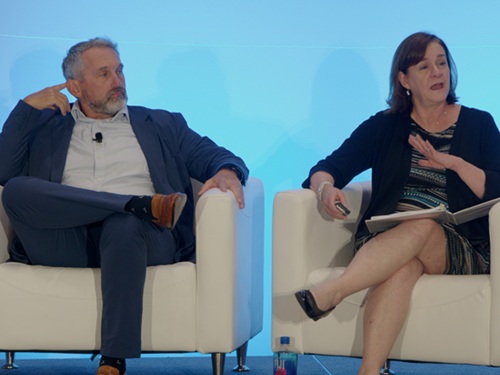
Georgia DOT’s Pirkle stressed that “true future proofing” is not always about the next technological innovation or software or “shiny project” concept. “Sometimes it’s just about the quiet, disciplined work that we do to maintain and protect what we’ve already built,” she explained. “This is our state’s most valuable asset; the system that everyone takes for granted, that it’s going to work every day – infrastructure that usually doesn’t even get noticed until it fails. And that’s fine, because we want our citizens to just go about their business and have their regular day and never even think about the road or the bridge they are using.”
Thus, at the end of the day, Pirkle said even the most innovative transportation system in the world doesn’t mean much if the pavement is failing or if the bridges are crumbling beneath us. “That means we are managing 20th century assets, many designed and built decades ago, under 21st century pressures such as heavier [freight] loads combined with skyrocketing traffic volumes. So, we’ve spent the last decade shifting to a more proactive approach – maximizing the life of every asset before it reaches a crisis point.”
Yet there is a crucial “reality check” for that approach, namely that inflation has pushed the price of material and labor costs higher, forcing the agency make “hard calls” from a funding perspective.
“Do we do more low-cost preservation treatments to keep things moving, or do we fund a few major expensive reconstruction projects? And when you’re maintaining 50- to 60-year-old interstate networks, it can be tough to balance those priorities,” Pirkle said. “So, because we can’t be everywhere at once, we have to be clinical about prioritization. We categorize every state route as critical, high, medium, or low. And this isn’t arbitrary – it is a rigorous process that allows us to funnel resources where they will have the most significant impact on safety and economic movement. And we update this prioritization system every five years or so to keep up with new roads, new development, and changing land uses.”
In essence, this means Georgia DOT is “using data to play the long game,” setting specific performance metrics to help identify “low-cost actions” that can positively impact things such as overall road pavement health and prevent massive failures later on.
NCDOT’s Peoples noted that, for his agency, this means integrating resilience across the planning, design, delivery, and maintenance components of the state’s transportation infrastructure assets.
“We embed resilience into every stage of project development, planning, design, delivery and ongoing maintenance – creating a seamless, data driven framework that strengthens our transportation network,” he said. “It is about anticipating risks before they become problems; helping us deliver safer, more durable infrastructure and help us reduce long term costs by cutting down emergency repair needs and minimizing service disruptions.”
He explained, in the case of a bridge requiring replacement due flooding or some other damage, instead of simply replacing what was lost, the replacement structure is designed better for the future.
“That means factoring in long-term maintenance needs, projected flood frequencies, and slope stability risks,” Peoples said. “This results in smarter designs with elevated roadway segments, improved drainage, and slope reinforcement. It is about using life cycle analysis to evaluate the long-term return on proactive improvements in areas waiting for full reconstruction.”
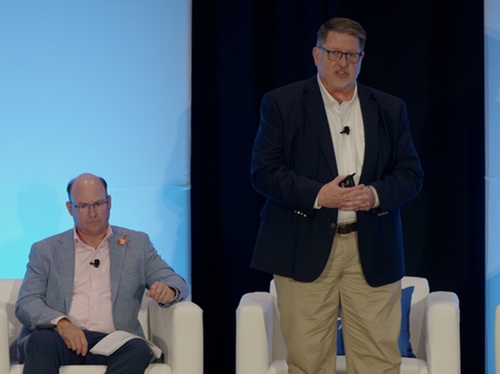
Those performance needs are necessitating a change in how state departments of transportation conduct data gathering efforts, noted Alabama DOT’s Conner. For example, to track road pavement conditions statewide, the agency traditionally relied on a system by which an excess of 12,000 samples are taken by hand from select roadway assets; a process that takes up to six months and costs anywhere from $1.5 million to $2 million a year.
Now, the agency is testing a third-party provided system whereby crowdsourced data from commercial vehicle dash cameras – trucks operating across the entire sate’s roadway network on a daily basis – provide information on everything from pavement cracking to missing signs; damaged guardrails, cable rails, and concrete barriers; and even roadside litter build-up.
“It’s important to understand this is not just detecting defects and assets,” Conner emphasized. “It is a condition assessment operation according to the maintenance quality assurance processes. It means our inspection costs can be lowered by as much as 90 percent [and] manual survey efforts also can be reduced over 90 percent. We’re expecting to be able to complete a survey in about six weeks instead of the aforementioned six months. And we have the opportunity for the assets being collected to eliminate inconsistent evaluation and human subjectivity.”

Also, he said that means going from sampling about 7 or 8 percent of the state’s road network and projecting the results to the rest, with a 90 to 95 percent confidence interval, every six months to 100 percent sampling and 99.99 percent confidence interval every few weeks if needed – with little relative increase in cost.
TxDOT’s Johnson said testing and adopting new materials technology is key to improving long-term resiliency for any number of transportation assets.
“Take new material usage. In particular, we’re getting into high performance binders to enhance pavement performance without changing structural design – allowing for reduced layer thickness, while maintaining equivalent road performance,” he said. “We are also really pushing heavy into a digital delivery program at this time to address the growing demands on the transportation system from a safety perspective where we’re improving construct ability analysis, enhancing visualization, and reducing work – all while contributing to safer construction environments and fewer work zone conflicts.”
Johnson added that, financially, digital delivery helps reduce errors, omissions, and change orders by improving project design accuracy. “That’s going to be one of the biggest benefits that we get from this – a reduction in change orders,” he said. “Also, with 25 [TxDOT] districts, we really had 25 different ways of doing things. And that’s something we’ve been trying to streamline over the years on every subject you can think of. But we’re a decentralized state. And so this is helping us find ways to stay decentralized, but yet find continuity in our operations.”
 Top Stories
AASHTO Comments on 'Corridors of Commerce’ Program
September 18, 2026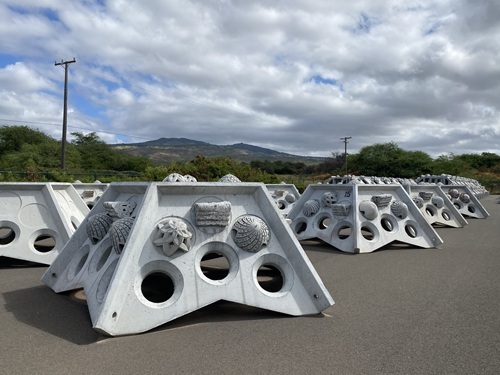 Top Stories
