


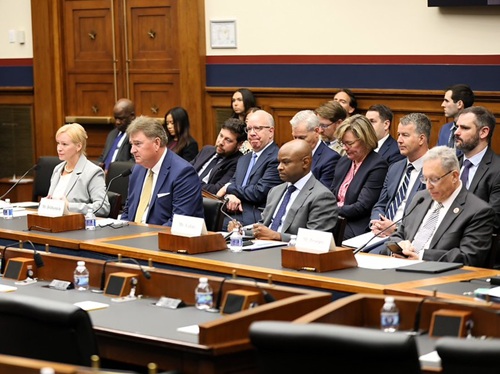
A hearing held by the House of Representatives Transportation and Infrastructure Committee on June 4 examined ways to continue modernizing America’s aviation while building more rural links to that system, especially via smaller airports.
[Above photo via the House T&I Committee]
The hearing – held by the House T&I’s Subcommittee on Aviation – featured testimony from Gregory Pecoraro, president and CEO of the National Association of State Aviation Officials (NASAO); Faye Malarkey Black, president and CEO of the Regional Airlines Association; Shawn Dobberstein, executive director of the Fargo Airport Authority on behalf of the American Association of Airport Executives; and Derrick Collins, director of physical infrastructure for the U.S. Government Accountability Office.
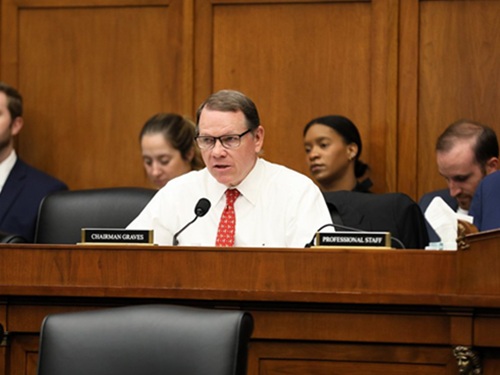
Rep. Sam Graves (R-MO), chair of the House T&I Committee, noted in his opening statement that Congress must continue to “build upon the momentum” initiated by the $12.5 billion investment made in air traffic control system upgrades in 2025 by making further investments in airport infrastructure.
“Whether they support commercial passenger service or provide publicly accessible facilities for general aviation pilots, airports are pillars of communities that drive economic growth and improve quality of life in their communities,” he said in his opening statement at the hearing.
“Critically, small airports are also the primary training ground for pilots,” Rep, Graves noted. “We must protect and preserve the freedom to fly for everyone – whether they are operating a personal aircraft, conducting business aviation, or traveling as passengers on commercial airlines.”

[Editor’s note: To address the need for skilled aviation workers, from pilots to air traffic controllers, the West Virginia Department of Education, in partnership with Marshall University, recently introduced the new Aviation Innovation and Readiness West Virginia or AIRWV Pathway program; a program that will rolled out to all state schools starting this fall.]
NASAO’s Pecoraro said fiscal support for “small community airports” is especially critical going forward as they provide key links for rural areas to the national airspace system.
“State government aviation agencies are on the front lines of the infrastructure and service challenges facing small community airports,” he said. “Small community air service in particular is under growing strain and continued federal support is critical.”
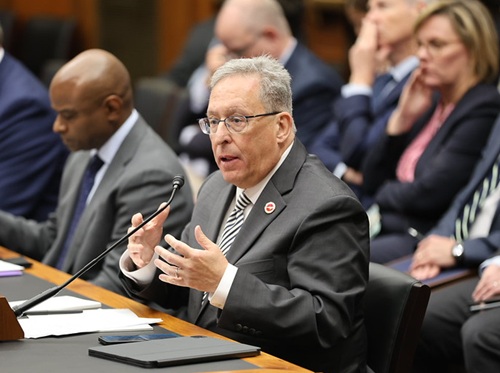
For example, Pecoraro noted that the federal Essential Air Service or EAS program remains an important resource for many communities, but it has not evolved in step with changes in the economy and airline industry.
“At the same time, the Small Community Air Service Development or SCASD program remains a valuable complement to EAS because many communities do not have the local resources needed to proactively attract or retain service on their own,” he stressed.
Furthermore, at many small community airports, commercial terminals are aging, undersized, and increasingly unable to accommodate larger aircraft or meet current Transportation Security Administration requirements.
“Modernization costs are substantial, and unlike at large commercial airports, airlines serving small regional airports rarely share significantly in those capital costs,” Pecoraro noted. “Meanwhile, airlines have increasingly moved toward larger aircraft and less frequent service. That trend creates real challenges for passengers and communities.”
On top of that, general aviation airports face parallel infrastructure challenges. “These airports are among the most underutilized and underfunded assets in the national aviation system, yet they may be the most practical near-term platforms for early advanced air mobility or AAM deployment,” he said. “When integrated into the broader transportation system, AAM could expand access for people in communities that have long been underserved. Realizing that potential, however, will require investment in those airports.”
 Top Stories
