


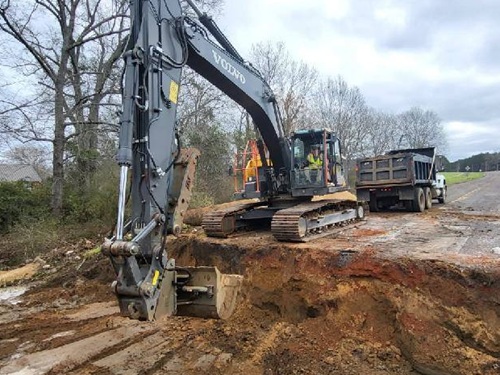
Governor Kay Ivey (R) recently said more than $7.6 million in funding is being allocated to 26 local road projects statewide; funding administered by the Alabama Department of Transportation or ALDOT.
[Above photo by ALDOT]
“These grants are giving our local communities the support they need to take on critical projects,” the governor said in a statement. “We are going to keep delivering results you can see mile after mile across our state.”
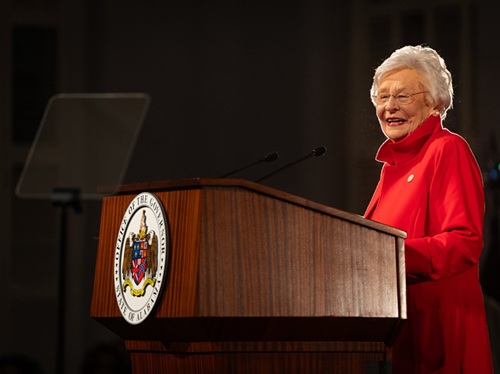
Those grants are from the first round of funding made available in 2026 under ALDOT’s Annual Grant Program; created by the Rebuild Alabama Act, which was passed by the state’s legislature and signed by Gov. Ivey in 2019.
The Rebuild Alabama Act requires ALDOT to establish an annual program setting aside a minimum of $10 million off the top of the state’s share of gas tax revenue for local projects, the agency said.
Cities and counties also contributed more than $1.9 million in local matching funds to the projects receiving Rebuild Alabama grants. The agency said all projects must move forward within one year of receiving funds.
ALDOT – which will issue additional local road project funding later this year – added that its Annual Grant Program has awarded more than $78 million in state transportation funding for local projects since the passage of the Rebuild Alabama Act seven years ago.
Other state departments of transportation have recently issued funding to support local road projects as well.

For example, the Vermont Agency of Transportation – known as VTrans – recently issued nearly $1.75 million in awards via the 2027 Vermont Better Roads Program to support municipal road projects that improve water quality and result in maintenance cost savings.
VTrans said those grants – issued in partnership with the Vermont Agency of Natural Resources and sourced from state transportation funds and the State’s Clean Water Fund aims to promote the use of erosion control and maintenance techniques that save money while protecting and enhancing water quality statewide.
Meanwhile, a legislative package passed by the South Dakota legislature and signed by Governor Larry Rhoden (R) earlier this year provides counties across the state with additional funding to repair and replace deficient culverts and small bridges on township and county secondary roads.
SB240 provides an additional $5 million to help counties and townships inventory their small structures, plan needed improvements, and pay for repair or replacement. Concurrently, SB236 extends the state’s Rural Access Infrastructure Fund or RAIF program and allows unobligated or unspent funds to be redistributed to other counties with unmet needs.
 States
Michigan DOT Issues $65M to Support Transit Projects
October 16, 2026 States
