


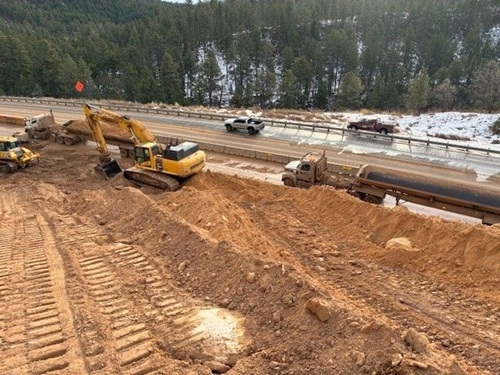
A legislative package passed by the South Dakota legislature and signed by Governor Larry Rhoden (R) this year will provide counties with additional funding to repair and replace deficient culverts and small bridges on township and county secondary roads.
[Above photo by the South Dakota DOT]
SB240 provides an additional $5 million to help counties and townships inventory their small structures, plan needed improvements, and pay for repair or replacement. Concurrently, SB236 extends the state’s Rural Access Infrastructure Fund or RAIF program and allows unobligated or unspent funds to be redistributed to other counties with unmet needs.
“These funds promote local control, enabling communities to put dollars to work in ways that best strengthen their infrastructure,” the governor said in a statement.

“Since this program was established, state and local governments have collaborated closely to secure and use the funding made available by the state legislators and Governor Rhoden,” added Joel Jundt, secretary of the South Dakota Department of Transportation.
“I applaud their foresight in 2021 to secure funding to upgrade county and township structures that are critical to the connectivity of the state’s transportation network,” he said.
The South Dakota DOT noted that, since its creation in 2021, the RAIF program has distributed $31 million in proportion to the number of eligible culverts and small bridges in each county.
To be eligible, structures must lie on fully maintained or minimum maintenance county secondary or township roads. Individual culverts or groups of adjacent culverts must have an outlet opening of at least 16 square feet, while small bridges cannot exceed 20 feet in length. Currently 8,252 eligible culverts and 467 eligible small bridges have been inventoried, South Dakota DOT said.
The agency added that counties and townships must provide at least 20 percent of the cost of any repair or replacement project with funds other than RAIF. Meanwhile, townships must either opt out of the tax freeze or impose a secondary road capital improvement tax levy to receive RAIF funding.
 States
Michigan DOT Issues $65M to Support Transit Projects
October 16, 2026 States
