


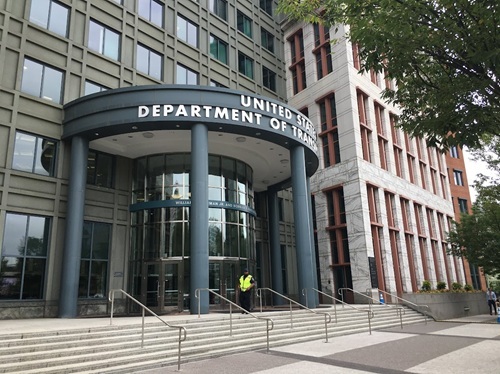
The American Association of State Highway and Transportation Officials recently provided feedback to the Federal Highway Administration as part of an information collection effort for the agency’s Transportation Performance Management Biennial Report.
[Above image by AASHTO]
In a letter sent to FHWA on October 21, AASHTO said that, while it generally supports the use of meaningful performance information to evaluate the effectiveness of the Federal-aid Highway Program and inform transportation investment decisions, the value of national performance information “must be balanced against the cost and administrative burden” imposed on state departments of transportation.
“AASHTO recommends that FHWA use the renewal process to establish a more disciplined approach to federal performance reporting: retain information necessary for national assessment, eliminate duplication, reduce repetitive narrative requirements, and provide states with greater flexibility in how they manage and communicate performance,” the organization said in its letter.
“The objective should be a reporting framework that preserves the quality and comparability of essential national information while reducing the resources required to produce it,” AASHTO noted.
In its letter, the organization offered four specific recommendations to FHWA:
- Necessity and usefulness of the information collection: Nationally consistent performance information can help FHWA assess system conditions, monitor performance trends, and understand progress toward national transportation goals. However, not every reporting element provides equal value to federal decision makers. “FHWA should periodically assess whether each required data element and narrative submission is necessary to support a specific federal decision,” AASHTO said. “Concurrently, state DOTs should retain appropriate flexibility to manage their transportation systems in response to their individual needs and circumstances.”
- Accuracy of the estimated reporting burden: AASHTO encourages FHWA to reassess and clearly document the methodology underlying its current estimate that each state DOT spends on average 2,040 hours providing performative data to the agency. “The full burden extends beyond entering information into the Performance Management Form and may include data acquisition, target development, analysis, validation, coordination with metropolitan planning organizations, narrative preparation, contractor support, and reconciliation with other reporting requirements,” AASHTO stressed.
- Improving the quality, usefulness, and clarity of information: FHWA should prioritize concise, decision-useful information that supports national performance assessment while reducing repetitive reporting. “Reporting should emphasize meaningful trends, material changes, and relevant context rather than requiring states to repeatedly provide information already available to the federal government,” AASHTO noted. “FHWA should also seek greater consistency and coordination across its information collection efforts to reduce conflicting definitions, duplicative requests, and unnecessary reconciliation.”
- Minimizing burden through coordination and technology: AASHTO encouraged FHWA in its letter to adopt a “collect once, use many times” approach across federal transportation programs. “When authoritative information is already available through existing federal reporting systems or submissions, FHWA should use that information rather than require state DOTs to reproduce it,” AASHTO emphasized. “These improvements should complement – not substitute for – eliminating requirements that do not provide sufficient value to justify their cost.”
 Nation
State DOTs Making Preparations for Winter Operations
October 23, 2026 Nation
