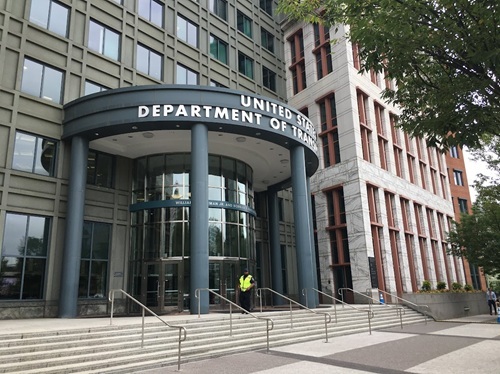
The American Association of State Highway and Transportation Officials recently commented on the U.S. Department of Transportation’s “Request for Information” regarding its Research and Development Strategic Plan for fiscal years 2026-2030.
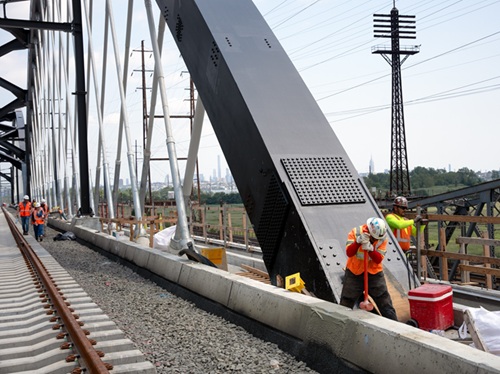
[Above photo by AASHTO]
In a letter to the USDOT’s Office of the Assistant Secretary for Research and Technology, AASHTO suggested that – over the next five years – the agency should focus on “implementation-focused research” to move proven solutions into practice, as well as ways to better connect transportation research to policies and eventual implementation efforts.
“Activities should prioritize developing actionable research projects that offer practical solutions to operational and safety challenges” faced by state departments of transportation, AASHTO said in its letter.
“Investments should focus on pilots, testbeds, and scalable demonstrations that can be readily adopted by state DOTs, paired with clear performance measures and guidance that translate research into practice,” the organization stressed.
Farther out – over the next 25 years, to be precise – AASHTO said USDOT should invest in “transformational research” that anticipates systematic shifts in transportation systems due to a host of long-term trends.
“Transportation is being reshaped by intersecting demographic, economic, social, and technological trends that challenge traditional planning and investment approaches,” the organization noted. “Where people live, work, and travel impact and influence transportation decisions. Concurrently, technology is changing rapidly as well – affecting how transportation agencies plan and deliver projects with data and digital tools.”
Some technology areas AASHTO said USDOT should concentrate on to attain that “future focus” include:
- Digitization and artificial intelligence-driven multimodal transportation systems alongside increased use of Mobility as a Service.
- Advanced automation, connected systems, plus traffic volume and demand forecasting to prepare for a fully an autonomous vehicle future.
- Rapid advances in vehicle electrification – including EVTOLs and drones – alongside commercial space travel and wider use of 3D printing technologies.
- Use of next-generation infrastructure including materials for longer-lasting infrastructure and embedded sensor systems.
- Future freight demand scenarios, supply chain strategies, and continued growth of e-commerce.
“USDOT can best lead and coordinate research and development activities by serving as a convener and integrator across all levels of government and sectors,” AASHTO said.
“At the federal level, this includes aligning research agendas across modal administrations and with other federal agencies to reduce duplication and accelerate deployment,” the organization noted.
“With state, local, tribal, and territorial partners, USDOT can prioritize co-developed research agendas that reflect real-world operational needs, while expanding access to data, tools, and technical assistance,” AASHTO stressed. “Across all partnerships, USDOT’s leadership role will be strengthened by a focus on transitioning research outcomes into scalable tools and deployable technologies.”