


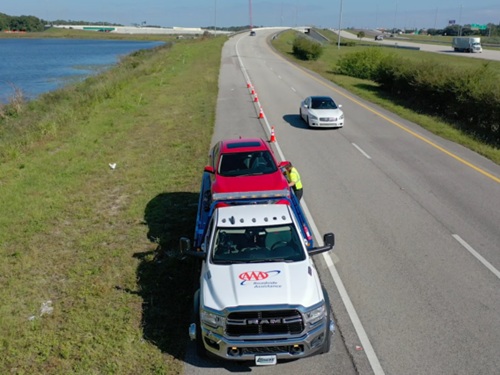
A new survey released by the AAA Foundation for Traffic Safety reveals a “dangerous gap” developing between driver awareness and roadside behavior, especially where “Move Over” laws are concerned.
[Above photo by AAA]
The group found that while more than 90 percent of the motorists it surveyed reported moving over and/or slowing down the last time they passed a disabled vehicle, tow truck, or police car on the shoulder, previous AAA research found that only 64 percent of vehicles subject to “Slow Down, Move Over” laws were observed changing lanes and/or reducing speed, while 36 percent did neither.
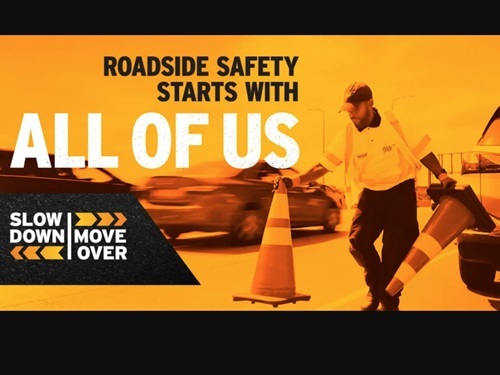
The survey further discerned that, when Slow Down, Move Over laws are explained, 90 percent of drivers support them, with only 2 percent opposed to them.
However, researchers found that “awareness gaps” remain as only 66 percent of drivers AAA polled believed their state law required special action near a stopped police car.
As a point of reference, AAA said in 33 states and Washington, DC, “Move Over” laws apply to all vehicles with flashing or hazard lights, including law enforcement; emergency medical service or EMS personnel; firefighters; highway maintenance, construction, or utility vehicles as well as for workers collecting trash; and disabled vehicles.
AAA added that recent roadside fatalities highlight the deadly consequences when drivers fail to slow down, move over, and stay alert. From 2019 to 2023, more than 2,100 people were struck and killed while stranded or working on the roadside, the group said.
“Many drivers know slowing down or moving over is the right thing to do,” explained Dr. David Yang, president and executive director of the AAA Foundation for Traffic Safety, in a statement. “But awareness is not enough. When drivers encounter a vehicle stopped along the roadside, they need to respond right away — because failing to slow down or move over can turn a standard stop into a preventable tragedy.”
For example, he noted that, in 2025, AAA responded to more than 30 million roadside events near active traffic, with 15 of its roadside service providers subsequently killed in Slow Down, Move Over-related incidents.
The danger is compounded by risky driving behaviors as six of those cases involved hit-and-run drivers, with five involving impaired drivers, AAA noted. “Every roadside stop is a danger zone,” stressed Gene Boehm, president and CEO of AAA. “The simple decision to slow down and move over saves lives. We all have a responsibility to keep Roadside Heroes safe as they rescue people.”
State departments of transportation have long championed a broad slate of efforts to increase roadside safety, especially where highway work zones are concerned.
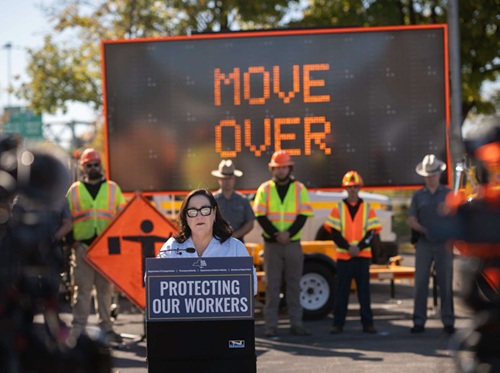
Every year, state DOTs participate in the National Work Zone Awareness Week or NWZAW campaign – hosting a variety of events and public outreach initiatives focused on the importance of protecting roadway workers and motorists in highway work zones.
Many states are also expanding the use of automated speed cameras in highway work zones across their respective regions to beef up protections for roadway workers and motorists alike.
State DOTs also develop and curate traffic law resources as part of their roadway safety outreach efforts; efforts that include volunteering time to provide safe driver training to young motorists,
Finally, state DOTs are also helping develop and deploy a wide array of technologies to improve roadside worker safety – everything from equipping highway workers with wearable “Guardian Angel” safety lights to installing alert systems on highway emergency response vehicles.
“We continue to broaden the tent to bring more and more people together to work on improving safety outcomes, for we are all in this together when it comes to safety,” explained Russell McMurry, the 2025-2026 president of the American Association of State Highway and Transportation Officials and commissioner of the Georgia Department of Transportation, in his opening remarks at the 2026 AASHTO Safety Summit in Hartford, CT, in September.
“What we need to think about is, with the insights technology and data give us today at our fingertips, how can we use them to accelerate improvements in safety? Because better data equals better insights, better judgement, and better results,” he stressed. “When it comes to safety, let us all be accused of trying.”
 Top Stories
State DOTs to See Benefits from Permitting Reform Bill
October 16, 2026 Top Stories
