


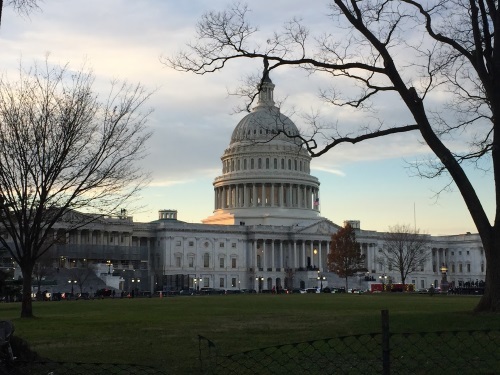
In late September, the Senate Environment and Public Works Committee and Energy and Natural Resources Committee introduced a bipartisan bill to reform the federal environmental review and permitting processes for energy and infrastructure projects; a bill that offers the potential to improve the ability of state departments of transportation to deliver key transportation projects and their benefits faster to communities across the country.
[Above photo by AASHTO]
Formally entitled the “Bipartisan American Affordability and Jobs Act of 2026,” this permitting reform bill incorporates elements of the “One Federal Decision” established by President Trump’s Executive Order 13807 in 2017 during his first term and later incorporated within the Infrastructure Investment and Jobs Act of 2021 as well as within the Fiscal Responsibility Act passed into law in 2023.
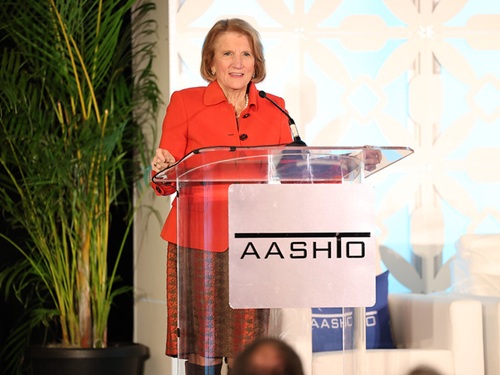
“For far too long, our broken and outdated federal environmental review and permitting processes have stood in the way of energy reliability, secure jobs, modern infrastructure, and economic growth,” noted Sen. Shelley Moore Capito (R-WV), chair of the EPW Committee, in a statement.
“The bipartisan reforms we secured in this deal will transform our nation’s ability to power our economy and fuel future growth, while continuing to protect the land, water, and wildlife we all cherish,” she said.
“It should not take decades to build the infrastructure our country needs,” added Martin Heinrich (D-NM) and ranking member of the ENR Committee. This bill “will help us get to ‘yes’ or ‘no’ on projects faster, while protecting important environmental safeguards and protecting the ability of tribes to formally consult during these processes.”
In a statement, Russell McMurry – AASHTO’s president and commissioner of the Georgia Department of Transportation – stressed that this bipartisan legislation represents “common-sense permitting reform” and dovetails with one of the main emphasis areas of his tenure: improving project delivery.
“For decades, state DOTs have emphasized the need to streamline the federal review and permitting process while preserving important environmental protections,” he said. “[This bill is] a major step in supporting our nation’s state DOTs to speed up delivery of projects and their tangible safety and quality of life benefits for all communities.”
According to analysis by the American Association of State Highway and Transportation Officials, there are several provisions within the Senate’s permitting reform bill of particular benefit to state DOTs:
- The proposed legislation would strengthen federal permitting deadlines and accountability, including timelines for agencies to issue permits and other authorizations following completion of National Environmental Policy Act or NEPA reviews, with additional mechanisms to address delays.
- It would reduce duplication and expand state flexibility through greater use of categorical exclusions, programmatic reviews, and state-produced environmental documents – all while expanding opportunities for states to assume federal responsibilities.
- The bill would also improve project certainty by establishing clearer timelines for judicial challenges, limiting disruptions to projects while agencies correct procedural deficiencies, and providing greater protection for previously issued federal approvals.
- Finally, the legislation would streamline related federal approvals, including changes to Clean Water Act permitting, Endangered Species Act consultations, and historic preservation reviews.
“These provisions align closely with AASHTO’s longstanding policy priorities to accelerate project delivery, reduce unnecessary federal regulatory burdens, and provide states with greater flexibility,” the group noted. “While some provisions go beyond traditional procedural streamlining and warrant further review, the bill contains substantial reforms that state DOTs have advocated for over many years.”
 Top Stories
USDOT Issues $200M in Grants to Expand Truck Parking
October 16, 2026 Top Stories
