


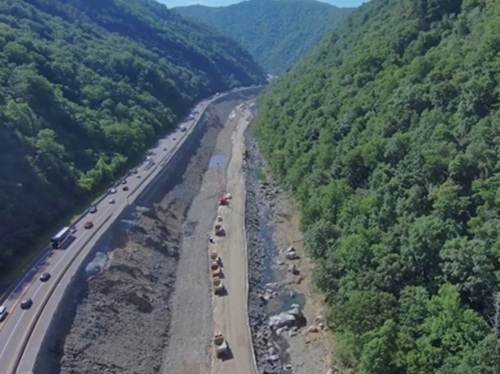
According to the North Carolina Department of Transportation, new geotechnical information gathered during reconstruction of I-40 through the Pigeon River Gorge is providing the agency with a more “complete picture” of conditions beneath the roadway, resulting in revised cost and schedule estimates for this highway reconstruction project – one of the largest such undertakings in the state’s history.
[Above photo by NCDOT]
In 2024, Hurricane Helene destroyed or severely damaged approximately five miles of I-40 in North Carolina through the Pigeon River Gorge, where the interstate is constrained by steep mountainsides and the Pigeon River.
Based on the new geotechnical information gathered by its engineers, NCDOT said the current estimated cost to reconstruct the corridor is approximately $2.8 billion, compared with an approximately $2 billion estimate calculated in early 2026. The department noted that it currently estimates restoring four lanes of traffic by late 2029 and continues to evaluate opportunities to accelerate that timeline.
As site access improves, crews have been able to conduct tests on the highway’s causeway every six feet instead of just at the interstate level to determine depth from the surface to bedrock. In some places along the 5-mile-long worksite, the bedrock is exposed, NCDOT said, while in others, it is more than 50 feet below the surface.
That detailed geotechnical information – gleaned from the samples taken at river elevation – show the depth to bedrock is deeper compared to samples previously taken at the interstate level. Reaching the deeper bedrock requires longer steel piles, which has increased the estimated cost and timeline to complete these repairs, the agency said.
“This is the most complex reconstruction NCDOT has ever conducted, and we remain focused on delivering the safest, most durable solution while carefully managing taxpayer dollars,” explained Daniel Johnson, NCDOT secretary, in a statement.
“We are rebuilding while we continue to investigate and design, which means our understanding of the work becomes more precise as construction advances,” he said. “We will continue to be transparent as those estimates evolve, while looking for every opportunity to reduce costs and restore four lanes of traffic as quickly as possible without compromising the long-term resilience of this critical interstate.”
NCDOT noted that its plan for the reconstruction of this 5-mile section of I-40 combines roller-compacted concrete walls, interlocking pipe pile walls, and associated elements designed to withstand forces that were exerted by the Pigeon River during Hurricane Helene – infrastructure designs intended to make the interstate more resilient to the hydraulic forces associated with future extreme events.
“History shows us that I-40 in the Gorge is vulnerable to flooding and failure, and not addressing the vulnerabilities now would result in the same damages at some point in the future,” said noted Wesley Grindstaff, NCDOT’s Division 14 engineer, who oversees highway operations in North Carolina’s 10 westernmost counties. “The cost and consequence of slope failure is very high along this critical transportation corridor.”
The agency and its project team noted that they evaluated other construction approaches, including tunnelling, building a highway viaduct, new roadway alignments, and different protective wall designs. Each failed to meet the needs of either constructability, schedule, federal reimbursement criteria or the ability to maintain traffic during construction, however.
“Our team continues to examine opportunities to expedite schedules and minimize costs within the design, construction methods, materials and sequencing without compromising the long-term resilience of the interstate,” Grindstaff pointed out. “We are reconstructing it to withstand future extreme weather and reduce the risk of another catastrophic failure.”
 States
Nebraska Highlights New State Infrastructure Initiative
September 11, 2026 States
