


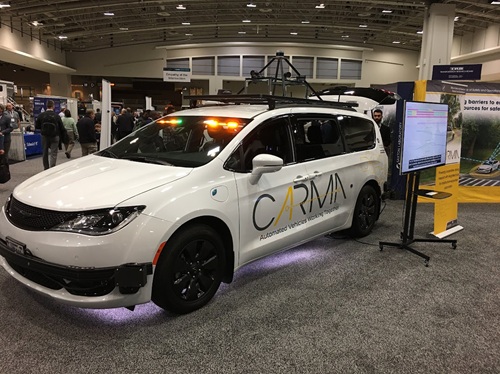
The American Association of State Highway and Transportation Officials recently provided feedback to the National Highway Traffic Safety Administration regarding the regulatory “framework” proposed by the agency in July regarding the operation of autonomous vehicles or AVs.
[Above photo by AASHTO]
AASHTO stressed that NHTSA’s AV framework – officially entitled “Updating and Expanding Guidance on Safe Development and Deployment of Automated Driving Systems” in the Federal Register – should define “oversight levels, safety data requirements, review criteria, modification procedures, and the conditions for expanding or restricting operations,” all aimed at ensuring safety is considered “at every step” of AV development and deployment.
“There is no greater priority for state departments of transportation than keeping residents and travelers safe when using transportation networks,” the organization noted in a comment letter to NHTSA.
“AASHTO recognizes that continued advancements in AV technologies have the potential to dramatically improve the safety of our roadways for all communities and users,” it said. “NHTSA should also clarify responsibilities among manufacturers, automated driving systems (ADS) developers, and operators for operational changes, compliance, reporting, and authorization modifications.”
Some of the other AV regulatory recommendations AASHTO offered in its letter to NHTSA include:
- As NHTSA works to streamline crash reporting, it should consider creating reporting requirements for infrastructure owners and operators to standardize and increase transparency and traceability for ADS comparison metrics generated by AV companies.
- NHTSA should also consider creating a standardized reporting format with detailed methodology requirements for the ADS data. Standardizing both the reporting requirements and format will bolster the effort to streamline reporting and reduce current reporting inconsistencies.
- Federal leadership in setting performance standards for AV technologies is very important and must be balanced with respect to the traditional and critical role that state DOTs play in regulating vehicle operations, driver behavior, roadway usage, and traffic enforcement.
- States must remain partners in the development, testing, and deployment of AVs – and any future federal legislation should preserve state oversight authority.
- Greater clarity regarding the scope of NHTSA’s oversight, its interaction with state and local requirements, and the treatment of potentially conflicting conditions would provide regulatory certainty and avoid any overlap or conflict.
 Top Stories
State DOTs to See Benefits from Permitting Reform Bill
October 16, 2026 Top Stories
