


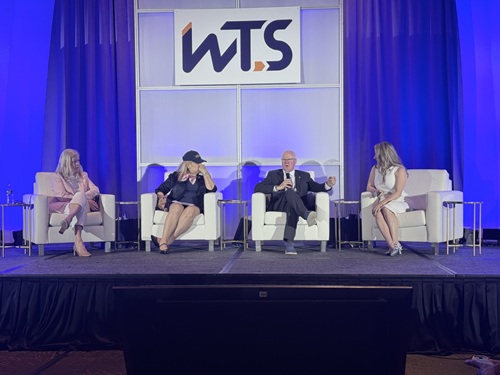
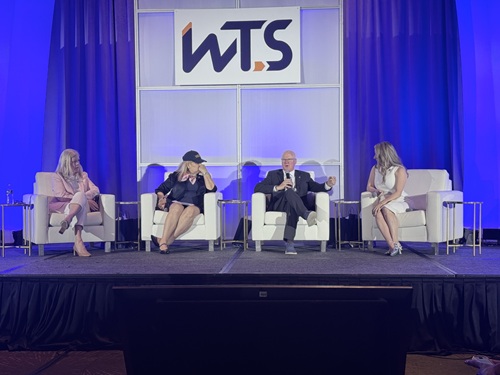
A fireside chat at the 2026 WTS International Conference, held May 5–7 in Los Angeles, examined how transportation agencies at the state, local, and federal levels can leverage interoperability and connectivity to create a safer, more reliable transportation system.
[Above photo by AASHTO]
Moderated by Bridgette Beato, chair of the WTS International board, the session featured Russell McMurry, commissioner of the Georgia Department of Transportation and 2025-2026 president of the American Association of State Highway and Transportation Officials; Seval Oz, senior advisor within the U.S. Department of Transportation’s Office of the Assistant Secretary for Research and Technology; and Leanne Redden, CEO of the Chicago Regional Transportation Authority.
McMurry discussed how partnering with the federal government – as well as public and private stakeholders – has progressed next steps toward integrating new technologies and systems so they can seamlessly work together and share information.
“What is that north star that USDOT can lean on? USDOT has leaned on this north star of interoperability,” he said. “We need to think about transportation holistically. We need to think of all the customers who are using transportation facilities.”
From autonomous vehicles to digital infrastructure, McMurry highlighted how emerging technologies can benefit transportation users across highways, mass transit, and active modes such as walking and biking.
“We need to think about how we digitize our infrastructure. It is an ecosystem from autonomy to connectivity,” he noted. “We need to think about things differently than we used to. We are in the digital environment … I think most states are moving that way, and we are having those discussions at AASHTO. We have a fantastic future.”
McMurry added that investing in digital infrastructure is critical to turning innovation into real‑world impact. “Technology is here now. We have to make those investments because it is all about safety, mobility and efficiency,” he said. “It can allow [cars] to see around corners, which makes these investments worth it.”
Redden stressed the importance of pairing new technological deployments with the human element – emphasizing that successful implementation depends on more than just technical progress.
“There is a human component to this. We shouldn’t forget about the education and communication piece of rolling this out. That includes drivers, riders, public officials and the public at large,” she said. “We should educate, inform and share information. We need to get people comfortable and understanding. It is not about taking away jobs but retooling and upscaling for a different future.”
In addition to education, panelists emphasized that effective change management is critical to the success of interoperability efforts across the transportation sector.
“The hardest thing to change is human behavior. We have to think creatively about this,” said Oz. “I believe in bringing up the new generation and having them tell me what I am doing wrong. By prioritizing the human element alongside deploying technology, transportation leaders can better position themselves for long‑term success in an increasingly connected future.”
 Top Stories
AASHTO Comments on 'Corridors of Commerce’ Program
September 18, 2026 Top Stories
