


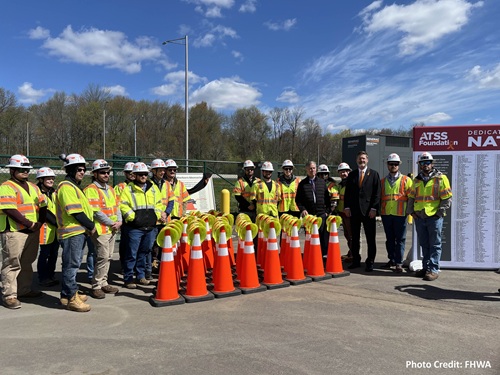
All across the country, state departments of transportation lent their support to the annual National Work Zone Awareness Week or NWZAW campaign – hosting a variety of events and public outreach initiatives focused on the importance of protecting roadway workers and motorists in highway work zones.
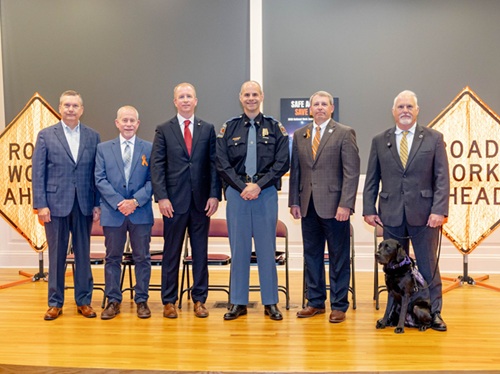
[Above photo by FHWA]
National Work Zone Awareness Week – which originated in 1999 when the Federal Highway Administration, the American Traffic Safety Services Association, and the American Association of State Highway and Transportation Officials signed a Memorandum of Agreement pledging to increase public awareness of work zone safety issues through a national media campaign – honors the workers and professionals who help keep construction zones safe, including highway crews, public works employees, utility companies, contractors, and law enforcement.
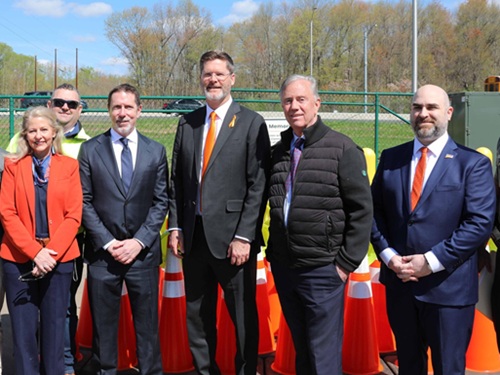
The Connecticut Department of Transportation hosted the national kickoff event for the 2026 NWZAW campaign – attended by Connecticut Governor Ned Lamont (D) and Sean McMaster, FHWA administrator – which was built around the theme of “Safe Actions, Save Lives,” to reinforce the importance of responsible driving in active work zones.
“Every decision we make behind the wheel matters,” said Gov. Lamont in a statement. “In work zones, a moment of distraction can have serious consequences. By slowing down, staying alert, and respecting roadway workers, we can help ensure everyone gets home safely.”
“Safety is the number one priority of the Trump Administration and all road users need to do their part to help reduce the number of fatalities that occur in work zones,” added FHWA’s McMaster. “We are calling on drivers to put down the phone, avoid distractions, obey posted speed limits, and focus on driving safely while traveling through active work zones. The lives of every highway worker depend on taking safe actions.”
“Safe actions behind the wheel save lives,” emphasized Garrett Eucalitto, CTDOT commissioner and past president of AASHTO. “Work zones are active, unpredictable environments, and our crews depend on drivers to slow down, stay focused, and follow the signs.”
Safety is also a key emphasis area for Russell McMurry, commissioner of the Georgia Department of Transportation and AASHTO’s 2025-2026 president – especially when it comes to work zone safety.
“I urge all motorists to prioritize safety on our roadways and in particular traveling through active or inactive work zones along our roadways here in Georgia every day of the year,” he noted. “It is important to ensure motorist safety, and the safety of our crews and those working day in and day out on behalf of the department’s many roadway projects.”
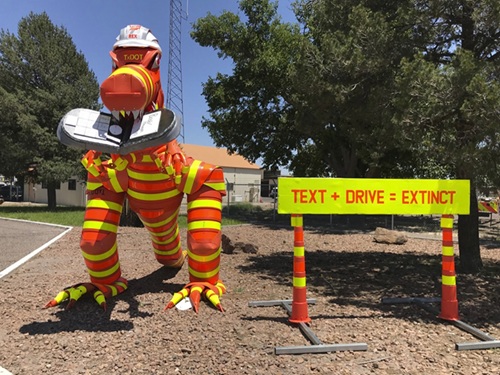
[Editor’s note: Many state DOTs also use some “creative methods” to spread the NWZAW safety message. For example, employees with the Texas Department of Transportation recently turned retired traffic barrels into an eye‑catching sculpture called “Tex” to spark curiosity and start conversations about work zone safety.]
In Montana, Governor Greg Gianforte (R) joined the Montana Department of Transportation (MDT), AAA, and the Montana Highway Patrol (MHP) to participate in a Mock Work Zone experience at MDT headquarters in Helena.
“Keeping workers and motorists safe in a work zone starts with awareness,” the governor said in a statement. “By slowing down, minimizing distractions, and following posted signage, we can all do our part to keeping everyone on Montana’s roadways safe.”
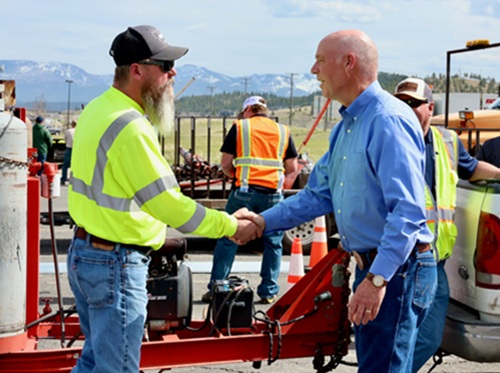
During Montana DOT’s event, attendees were informed on how to properly navigate different types of work zones by walking through a construction work zone, guided by some of the department’s employees who are accustomed to working on busy highways and interstates, and stopping at checkpoints to learn about how to travel through one safely.
“Work zone safety means operating safely every trip, every day we’re on the road,” said Chris Dorrington, Montana DOT’s director. “As MDT enters its busiest season, it is especially important to remember that behind every cone is a real person from your community.”
These events highlighted the dangers faced by state DOT personnel and contractors in highway work zones. For example, the Oregon Department of Transportation noted that work zone crashes in Oregon hit a five-year high in 2024 – 621 crashes – that claimed 14 lives and resulted in 36 serious injuries.
The Alabama Department of Transportation noted that while work zone crashes have been increasing in recent years, fatalities and injuries due to those crashes have thankfully been falling.
In 2024, there were 2,043 work zone crashes in Alabama, resulting in 15 fatalities and 527 injuries. The number of crashes increased by over 250 from the previous year, while the number of fatalities decreased by 10 from 2023. In 2025, there were 2,543 work zone crashes in Alabama, resulting in 11 fatalities and 709 injuries. Yet while the number of crashes increased by 500 from the previous year, the number of fatalities decreased again.
“The number of crash fatalities in work zones in Alabama continues to decrease year after year,” said Dalton Middleton, ALDOT’s Drive Safe Alabama coordinator, in a statement. “Events like National Work Zone Awareness Week give us opportunities to bring good information to drivers and roadside workers on how to stay safe in work zones.”
Yet that decline does not mask the “deeply personal” toll work zone fatalities take on state DOT workers and contractors and their families. The Colorado Department of Transportation honored the memories of Trent Umberger and Nate Jones – members of Colorado DOT Patrol 1 based in Grand Junction – who were killed in September 2024 when they were struck by a vehicle that veered off the pavement. They joined 62 other Colorado DOT employees lost in work zones since 1929, five of them in the past 10 years alone.
“Every day, our crews and contractor partners work just feet away from live traffic to keep Colorado’s roads safe and reliable,” said Shoshana Lew, Colorado DOT’s executive director, in a statement. “Every name etched on our memorial rock represents a life lost – a colleague, a friend, a member of our family. National Work Zone Awareness Week is an important reminder that when drivers slow down and pay attention, they help ensure these workers can return home safely at the end of the day.”
Other state DOTs also held vigils for their fallen workers as part of their NWZAW campaigns, such as the Arkansas Department of Transportation, Mississippi Department of Transportation, and the South Carolina Department of Transportation.
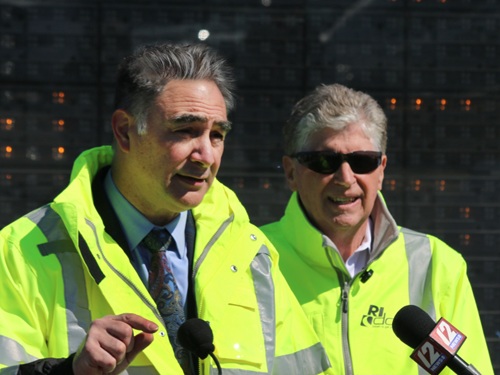
Robert Rocchio, interim director of the Rhode Island Department of Transportation, stressed that such work zone crashes are entirely preventable if motorists would just slow down and pay attention.
“If you encounter a work zone, your first instinct should be to reduce your speed and drive very carefully, knowing there are many workers along the sides of the road, often mere feet away from fast-moving highway traffic,” he said in a statement. “Each April we get together in solidarity with state DOTs across the country, law enforcement and all our safety partners to reiterate these safe driving messages and ask for the public’s help in making sure all our workers go home safely after a hard day’s work.”
State DOTs are also developing technologies to help make work zones safer. For example, the Florida Department of Transportation launched its Safety Work Zone Innovation for Today and Tomorrow or “SWIFTT” challenge in 2024 to bring together private stakeholders, industry experts, and government agencies to develop creative solutions to work zone safety challenges.
Florida DOT has been deploying some of the winning entries from that competition over the last year, such as a system that combines Light Detection and Ranging or LiDAR technology, radar, cameras, wearable smart watches, and wearable alert speakers to provide roadside workers with potential collision warnings, as well as a truck-mounted robotic pavement marking system that minimizes crew exposure to roadway traffic.
Yet Carlos Braceras, executive director of the Utah Department of Transportation, emphasized that work zone safety isn’t just important during National Work Zone Awareness Week; it matters every day. “As more crews are out working and more people are on the road, we need drivers to slow down, pay attention and do their part to keep everyone safe,” he said in a statement.
 Top Stories
Top 12 America’s Transportation Awards Finalists Revealed
September 11, 2026 Top Stories
