


The U.S. Department of Transportation and the Federal Highway Administration recently launched the “Freedom to Drive” initiative; a program designed for states to collaborate with USDOT on ways to tackle increasing traffic congestion along key roadway corridors across America.
[Above image by USDOT]
Sean Duffy, USDOT secretary, explained that this initiative seeks to maximize roadway capacities, fast-track projects that alleviate traffic congestion chokepoints, and leverage American technology and private-sector partnerships to improve traffic flows.
Further, rebuilding America’s aging highway infrastructure is estimated to cost nearly a trillion dollars, Duffy noted – which is why leveraging private sector partnerships help taxpayer dollars to go further while delivering new transportation infrastructure safely and efficiently, he said.
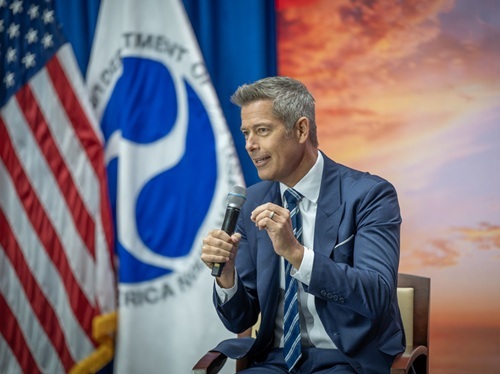
“We are working to deliver less congested roads, making it a little easier to get where you need to go,” Duffy emphasized in an April 20 letter sent to all 50 U.S. governors. “Gridlock is not just an inconvenience; it is a massive economic burden. It’s a tax on our families, a tax on our truckers, and a tax on our entire economy.”
In his letter, Duffy noted that America’s more than 4 million miles of public roads handle 92 percent of the nation’s commuting trips and carry 72 percent of all its freight. “Yet, in 2024, the average urban auto commuter lost 63 hours stuck in traffic. That equates to $269 billion in lost productivity. Over the next 25 years, vehicle travel will grow another 16 percent and freight shipped by truck is expected to increase by nearly 50 percent.”
He pointed out that, while traffic congestion is a “well-known issue” in urban settings, its impact extends far beyond U.S. cities.
“Both urban and rural areas experience congestion and safety hazards due to traffic incidents, weather, work zones, and special events,” Duffy stressed. “A lack of alternative routes for diversion in rural areas can magnify the impacts of traffic breakdowns. Furthermore, freight bottlenecks near major distribution hubs create significant burden on national productivity.”
That’s why USDOT and the FHWA plan to use “every tool in the federal toolbox” to fix the nation’s traffic congestion problems, added Steven Bradbury – deputy USDOT secretary – in a separate statement.
“The Freedom to Drive initiative exemplifies the Trump Administration’s commitment to leveraging public and private sector collaboration,” Bradbury said. “By working hand-in-hand with states to tackle our toughest infrastructure challenges, we will eliminate the bottlenecks.”
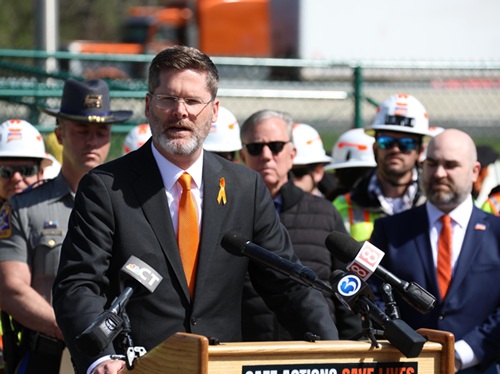
Sean McMaster, FHWA administrator, pointed out that this effort is also focused on developing “local solutions that serve all road users” versus federal bureaucrats favoring one mode of travel over another. To further support this initiative, McMaster noted that FHWA has launched the Freedom to Drive website as a central resource for technical tools and congestion-relief strategies.
 Top Stories
AASHTO Safety Summit: Safety as a ‘Core Design Element’
October 2, 2026 Top Stories
