


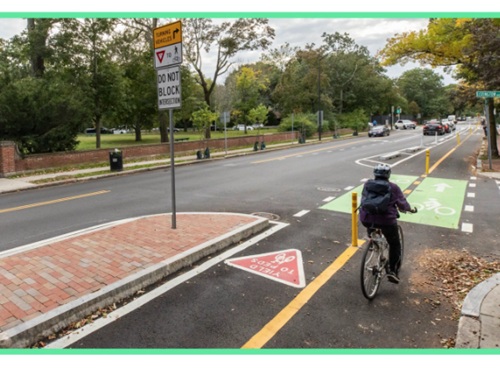
The Massachusetts Department of Transportation recently issued $10 million via its new “Microtransit and Last-Mile Transit Grant Program” to support Regional Transit Authorities (RTAs), municipalities, and a Regional Planning Agency (RPA) to expand the use of technology-enabled transit options statewide.
[Above image by MassDOT]
The agency noted that those grants – made possible by $10 million in Fair Share funding through the state’s fiscal year 2025 supplemental budget – will support projects that use microtransit, on-demand shared-ride services, and last-mile connections that link riders to transit hubs and key destinations.

Award recipients will also use that funding to expand rural access, improve mobility for people who lack transit options, and support communities advancing sustainable housing and transportation planning, MassDOT said – including for regional bikeshare initiatives that strengthen first and last mile connections.
“Through our new Microtransit and Last Mile Transit Grant Program, MassDOT is empowering municipalities, RTAs and RPAs to deliver innovative transportation solutions that focus on connectivity between transit hubs and destinations,” noted Phil Eng, interim MassDOT secretary and general manager of the Massachusetts Bay Transportation Authority, in a statement.
Many state departments of transportation provide support for a variety of transit services in their respective regions of the country.
For example, in late February, the Wisconsin Department of Transportation – in partnership with private bus service providers Greyhound, Indian Trails, Jefferson Lines, Lamers Bus, and Wisconsin Transit Lines – expanded the services offered via state-supported bus routes that connect rural and mid-sized communities as well as big cities; an effort that included the launch of the new Route 11 service between the cities of La Crosse and Green Bay.
Also in February, the Minnesota Department of Transportation expanded the data sets available through the Transit planning mobile application and its planning website to include more rural public transportation services. MnDOT said, as a result of that effort, residents can now plan statewide transit trips using the Transit app or the website mntransitplanner.com after the agency expanded its reach to help more transit agencies across Minnesota make their services more visible and accessible.
 States
