


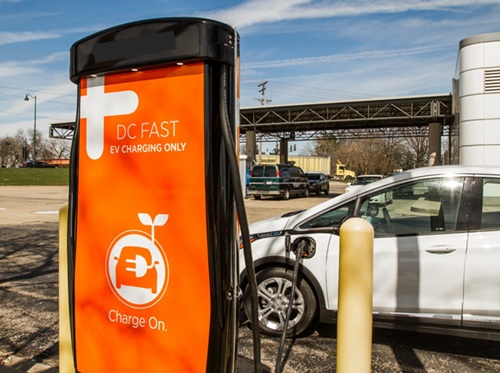
The American Association of State Highway and Transportation Officials recently provided feedback to the Federal Highway Administration regarding the agency’s proposed waiver of “Build America, Buy America” requirements for electric vehicle or EV chargers published in the Federal Register on February 12.
[Above photo by USDOT]
While AASHTO stressed to FHWA that the state DOT community “remains steadfast” in its support for the “Build America, Buy America” Act as it seeks to strengthen America’s manufacturing capacity, promote domestic jobs, and encourage economic growth, the organization continues to recommend “a more gradual and deliberate transition” to those requirements to “minimize disruptions especially where the Electric Vehicle Supply Equipment or EVSE domestic supply chain is concerned.”
AASHTO warned that the EVSE supply chain currently cannot provide “sufficient quantities” of American-made EV charging components to meet the proposed revision to the “Buy America” standard.
“Consequently, state DOTs would be unable to meet the immediate requirement to increase the domestic content threshold for EVSE components from 55 percent to 100 percent of total component cost,” the group said in its letter. “The inability of state DOTs to comply with the proposed change will negatively impact current and open project schedules, contracts, and budgets.”
AASHTO added that state DOTs use a broad range of products as part of the federal-aid projects they oversee; upwards of over 13,000 unique products across more than 30 categories, many of which are not – or have significant components that are not –readily available domestically.
AASHTO stressed that it presents this position “not as an argument” for avoiding “Buy America” requirements, but to underscore the immediate difficulty of complying with FHWA’s proposed policy change to “Buy America” waivers.
“The domestic supply chain will require a reasonable ramp-up period to allow for the growth of a competitive, high-quality market at scale,” AASHTO added. “EVSE is no different from any of the traditional federal-aid programs and projects; it must be given the same consideration and flexibility.”
Furthermore, AASHTO emphasized, “EVSE projects and deployments require significant supplemental investments in construction and utility infrastructure beyond the chargers themselves. If EVSE is ineligible or otherwise unavailable at scale, the lack of federal investment will negatively impact auxiliary investments and broader economic sectors.”
 Top Stories
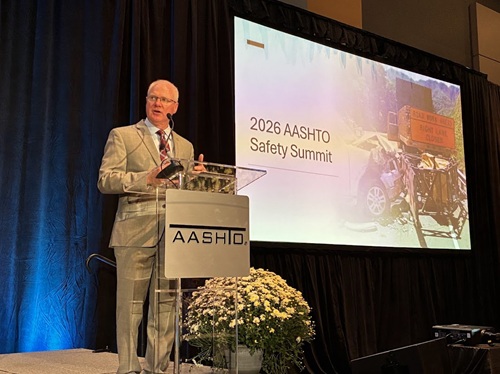
AASHTO Safety Summit: Safety as a ‘Core Design Element’
October 2, 2026 Top Stories
