


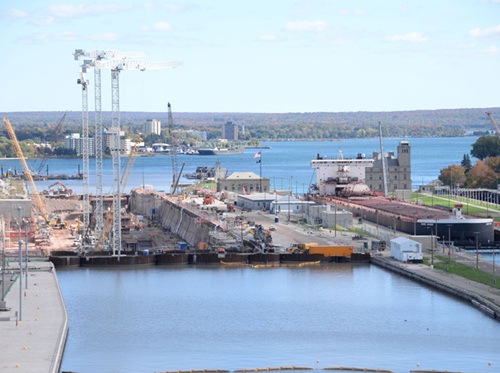
On January 27, Governor Gretchen Whitmer (D) unveiled a new “Michigan Maritime Strategy” 10-year initiative; what she dubbed a “first-of-its-kind” plan designed to “unlock economic growth” by attracting new investments, fostering innovation, and strengthening Michigan’s water-based economy – all while protecting the natural resources that define the Great Lakes.
[Above photo by U.S. Army Corps of Engineers]
The governor noted in a statement that Michigan ports support approximately 17,000 jobs and contribute $3.3 billion a year to the state’s economy, while water-based Michigan tourism supports about 45,000 jobs and generates nearly $12 billion a year.
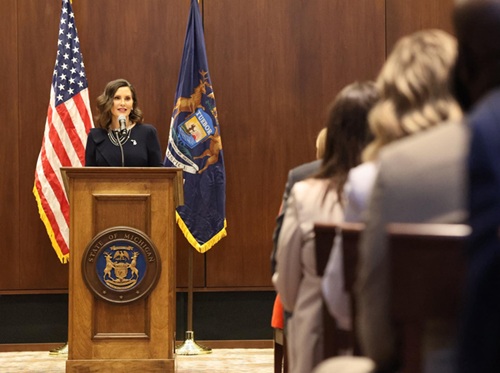
“The Michigan Maritime Strategy is a long-term plan for us to create good-paying local jobs and attract cutting-edge investments while protecting our Great Lakes, which contain 21 percent of the world’s fresh surface water,” Gov. Whitmer said.
“Because of our unique natural resources, we have an incredible opportunity to harness them to grow our economy and an awesome responsibility to safeguard them for future generations of Michiganders,” she added. “With this new strategy, we will do both, ensuring our waters remain a source of pride and prosperity for generations to come.”
The Michigan Maritime Strategy involves several key state agencies, including Michigan’s Environment, Great Lakes, and Energy (EGLE); Transportation (Michigan DOT); Agriculture and Rural Development; Natural Resources (DNR); the Office of Future Mobility and Electrification within the Michigan Economic Development Corporation; and the Department of Labor and Economic Opportunity (LEO).
The strategy centers on six goals for decision-making, policymaking, and investment:
- Modernize ports and invest in intermodal infrastructure.
- Grow Michigan’s maritime manufacturing economy.
- Accelerate adoption of low- and zero-emission vessel technologies and fuels.
- Lead the nation in recruitment, training, and retention of the maritime workforce.
- Cultivate a thriving maritime innovation ecosystem.
- Increase sustainability and resilience of recreation harbors and marinas.
This strategy was developed through a year-long, stakeholder-driven process led by EGLE’s Office of the Great Lakes with support from state agencies and partners. Facilitated by the University of Michigan’s Department of Naval Architecture and Marine Engineering, the effort engaged more than 200 participants from government, industry, business, communities, and academia through interviews, site visits, and workshops.
“The new strategy is key to modernizing ports, expanding markets, diversifying cargo, and improving supply chain resilience,” said Bradley Wieferich, director of the Michigan DOT. “It will ensure our marine highways remain efficient, reliable, and competitive while supporting economic development and global connectivity.”
 Nation
Air Taxi Demonstration Conducted at Texas Airport
September 18, 2026 Nation
