


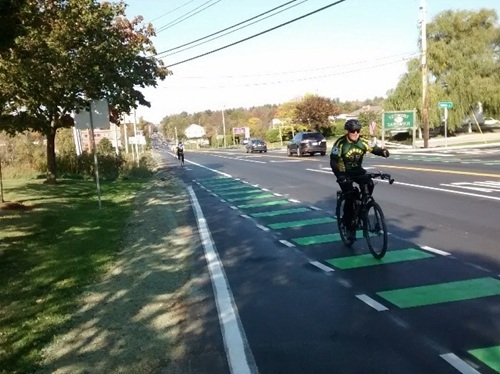
The Vermont Agency of Transportation – known as VTrans – and the Bennington County Regional Commission are jointly hosting the 2026 Vermont Walk/Bike Summit on May 8, with support from other partners and sponsors.
[Above photo by VTrans]
The 2026 event is the sixth biannual Vermont Walk/Bike Summit and brings together bicycle and pedestrian advocates, planners, professionals, consultants, and enthusiasts from throughout Vermont, as well as neighboring communities in Massachusetts and New York.
Through a mix of classroom-style and mobile workshops, the event will focus on themes such as cross-border and cross-modal collaboration, social connection through active transportation, pedestrian and cyclist safety, and designing streets for everyone.
“The Walk/Bike Summit is an exciting opportunity for experts and enthusiasts to collaborate, brainstorm, and plan new and better ways to expand bicycle and pedestrian infrastructure, projects, and programs that will benefit Vermonters and visitors to our state,” said Joe Flynn, VTrans secretary, in a statement.
Across the country, state departments of transportation support a variety of active transportation efforts.

For example, the Montana Department of Transportation is hosting its annual “Bike & Roll to School Day” on May 6 – an opportunity for Montana schools to join a nationwide movement that promotes healthy habits, safer streets, and stronger communities by encouraging students to bike or roll to school while raising awareness about the importance of traffic safety for everyone.
And the Maryland Department of Transportation will host a series of events in May highlighting the importance of bike safety, equitable access and healthy lifestyles; part of the agency’s Serious About Safety initiative to protect lives and reduce the number of road fatalities – especially for those who walk, bike, and roll.
“Just like using a bus, train or car, biking is a primary way Marylanders travel to work, school, and access life’s opportunities,” noted Katie Thomson, Maryland DOT secretary, in a statement. “Safety is a shared responsibility. Share the road and give each other space.”
Meanwhile, in March, the Massachusetts Department of Transportation noted that its Special Commission on Micromobility – established by the state legislature as part of the economic development bill, the Mass Leads Act – issued a final report that offers recommendations for expanding micromobility options statewide.
The agency said that “micromobility vehicles” include bicycles, electric-power bikes or e-bikes, scooters, e-scooters, skateboards, and other small personal travel devices.
And in December 2025, the Hawaii Department of Transportation unveiled a new “Priority Multimodal Network” – a collection of 113 projects on the state highway system that will fill accessibility gaps for pedestrian, transit, and bicycle users across the Hawaiian island chain.
The agency said those projects include shared-use paths, protected bike lanes, sidewalks, and transit facilities – with the program focusing resources and accelerating implementation timelines sooner than originally planned.
Together, those projects will provide affordable transportation options and improve connections between Hawaiian communities, Hawaii DOT emphasized. The agency plans to invest approximately $360 million in this multimodal project effort over the next 10 years.
 States
Larry Flynn Named as Director for Montana DOT
October 2, 2026 States
