


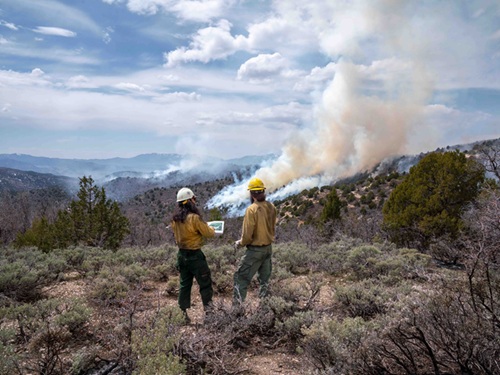
The Utah Department of Transportation is linking hundreds of its traffic cameras to a wildfire detection and monitoring system being developed by the Utah Education Network or UEN and the University of Utah.
[Above photo by the Utah Forestry, Fire, and State Lands]
In September 2025, UEN partnered with the Bureau of Land Management; the Utah Division of Forestry, Fire, and State Lands; the Utah DOT; and the Utah Communications Authority via a Fuels Management and Community Fire Assistance program grant from the U.S. Department of the Interior to build a wildfire monitoring network across Utah.
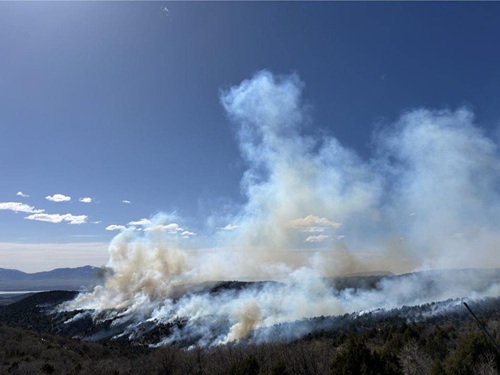
In a blog post, UEN said its goals in developing this system are to enhance wildfire detection, management, modeling, and safeguards through rapid response and research using live video feeds and artificial intelligence or AI.
Jeff Egly, associate director for research support and strategic partnerships for UEN and a principal investigator for this project, explained in the post that in the “far out reaches” of Utah’s Wasatch Mountain range, “it can take a while for someone to report a fire. So, cameras will really quicken the response time.”
[Editor’s note: The Colorado Department of Transportation recently kicked off the statewide camera installation project that will replace 66 cameras throughout the state – including several located in remote areas of regions where people rely on the cameras to view highway conditions. The agency said the new camera infrastructure represents a full transition to a state-owned, state-managed network designed for long-term reliability, cost savings and operational control.]
There is also a major cost-benefit to improving wildfire response times, Egly added. For example, according to fire news service Daily Dispatch, Utah experienced 1,146 wildfires in 2025 that burned 164,707 acres – fires that cost about $191.8 million to fight.
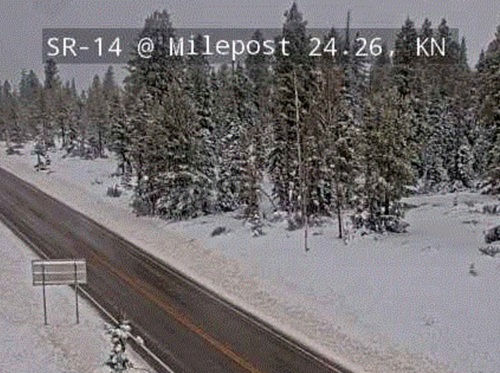
UEN plans to install as many as 40 cameras in the coming years in rural, hard-to-reach areas where federal, state, local agencies, and first responders lack visibility, Egly said. As a result, UEN is working with ALERTWest – a company that partners with public and private organizations like universities, first responders, utilities, and land stewards – to create a network of cameras that feed into its “situational awareness platform,” which is powered by an AI engine that monitors the cameras 24/7.
When a fire signature is detected, someone from ALERTWest verifies whether it’s valid, and if necessary, begins notifications to the appropriate agencies. Those agencies and first responders will have access to the cameras, including the ability to control and maneuver them, UEN noted.
Now Utah DOT is integrating hundreds of its traffic cameras into the ALERTWest system to help beef up its coverage. While those traffic cameras are fixed, meaning they cannot be maneuvered, the monitoring and notification processes work the same.
In the future, Egly noted that UEN may add motorized wildfire cameras to key Utah DOT camera locations – including corridors where the agency has a vested interest, such as I-15 south of Cedar City where fires have crossed the interstate, forcing Utah DOT to close it.
“Utah was a doughnut hole on the western map prior to adding UDOT cameras,” Egly said. “Now, traffic cameras are providing visibility – a real benefit to first responders.”
 States
USDOT Helps SCDOT Start on Major I-95 Bridge Project
April 10, 2026 States
