


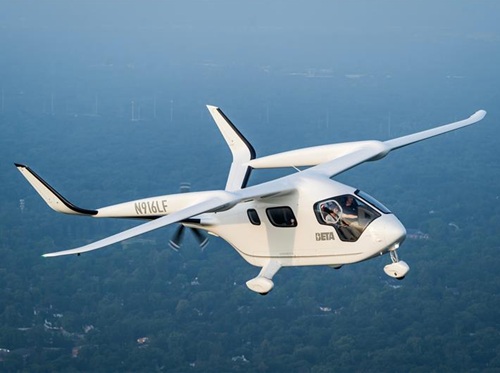
The U.S. Department of Transportation recently selected eight proposals to help safely integrate next-generation Advanced Air Mobility or AAM aircraft into the national airspace, with state departments of transportation involved in more than half of them.
[Above photo via TxDOT]
The agency said those projects will create “one of the largest real-world testing environments” for next-generation aircraft in the world, with the Federal Aviation Administration using data from them to develop new regulations that safely enable this futuristic technology at scale.
USDOT added that the public should see those projects – support by the FAA’s new AAM and Electric Vertical Takeoff and Landing (eVTOL) Integration Pilot Program – begin operating by this summer.

“Working together, we will ensure America leads the way in safely leveraging next-gen aircraft to radically redefine personal travel, regional transportation, cargo logistics, emergency medicine, and so much more,” noted Sean Duffy, USDOT secretary, in a statement.
“These partnerships will help us better understand how to safely and efficiently integrate these aircraft into the National Airspace System,” added Chris Rocheleau, FAA’s deputy administrator. “The program will provide valuable operational experience that will inform the standards needed to enable safe AAM operations. We appreciate the strong interest reflected in the many proposals we received.”
USDOT said the eight selected projects span 26 states and involve leading aircraft manufacturers, operators, and state partners. They include a range of operational concepts, including urban air taxi services; regional passenger transportation, including short takeoff and landing aircraft; cargo and logistics networks; emergency medical response operations; and autonomous flight technologies, among others.
USDOT’s initiative also brings together more than 30 public and private partners to conduct real-world eVTOL flight operations and evaluate how advanced aircraft could support cargo delivery, emergency response, wildfire response and future passenger transportation.
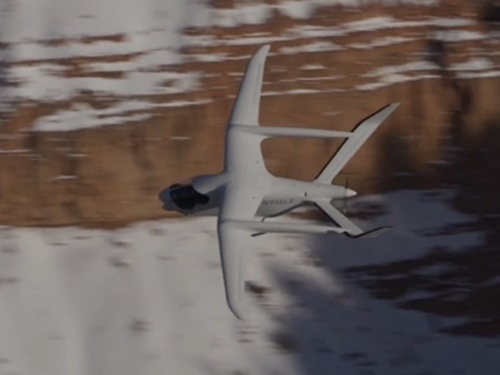
The Utah Department of Transportation will lead one of those test programs, which includes state agencies in Oregon, Idaho, Arizona, and Oklahoma, along with industry partners such as BETA Technologies, Ampaire, Joby Aviation, Lockheed Martin, Future Flight Global, Alpine Air, Jump Aero and 47G.
Testing will take place across a wide range of operating environments throughout the western United States, including urban areas, rural corridors, mountainous terrain and wildfire-prone regions. These diverse conditions will help federal aviation officials better understand how advanced aircraft perform in real-world scenarios.
“Our job is to look ahead and prepare for what transportation will look like in the future,” noted Carlos Braceras, Utah DOT’s executive director, in a statement. “This partnership allows Utah to help lead the way as new aviation technologies become part of everyday mobility.”
The Texas Department of Transportation will lead another test program, one focused on supporting regional test flights connecting the Texas Triangle (Dallas/Fort Worth, Austin, San Antonio and Houston) and rural communities with air taxi networks expanding from each city to extend regional reach.
In a statement, TxDOT said it will launch this particular pilot project in phases over the next three years, with the first phase including test flights without passengers and with traditional aircraft such as helicopters and fixed-in wing planes to validate the appropriate routes.
Other state DOTs leading or involved in similar testing initiatives via the FAA’s program include the Florida Department of Transportation, the Pennsylvania Department of Transportation, the Louisiana Department of Transportation and Development, and the North Carolina Department of Transportation.

 Top Stories
