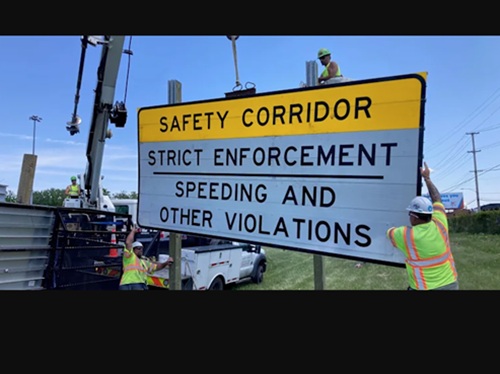
Following a successful reduction in crashes, the Ohio Department of Transportation and the Ohio State Highway Patrol (OSHP) are replicating the I-90 speed and seat belt safety corridor to a nearly 14-mile section of I-480 in Cuyahoga County.
[Above photo by Ohio DOT]
During the two-year period from July 2024 to July 2026, troopers issued 974 speed and 524 seat belt violations to motorists travelling I-90 between East 55th and East 260th streets; enforcement efforts that resulted in a 38 percent decrease in fatal crashes, a 32 percent decrease in the number of serious injury crashes, and a 23 percent decrease in total crashes, compared to the previous two year period spanning July 2022 to July 2024.
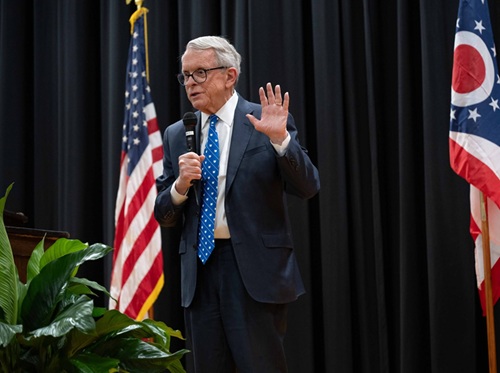
“Since creating the I-90 safety corridor two years ago, fatal and serious-injury crashes on this eight-mile stretch of road have decreased – showing that this strategic, no-tolerance approach to reckless driving saves lives,” said Governor Mike DeWine (R) in a statement. “I am fully confident we will have the same impact on I-480, resulting in fewer crashes and more people making it home at the end of the day.”
According to the OSHP, there have been nearly 800 crashes on I-480 between the Lorain County line and SR 176 over the past two years that resulted in nine fatalities, with speed and unbelted occupants two of the top crash variables.
“We firmly believe the success achieved on I-90 with reducing crashes and educating motorists can happen on I-480,” noted John Picuri, deputy director for Ohio DOT District 12. “This corridor is not only about issuing citations, but also about saving lives and reducing injuries on Ohio roads.”
Ohio DOT has installed multiple road signs along the I-480 corridor to notify motorists about the increased law enforcement presence on that highway and remind them to obey the speed limit and buckle up. Two of these signs will include a digital counter displaying the number of days since the last serious crash, the agency said.
“Our goal with establishing speed and seat belt safety corridors is to remind motorists that responsible driving saves lives,” said OSHP’s Lt. Timmothy Hoffman. “By focusing enforcement and education in high-risk areas, we hope to reduce dangerous behaviors like speeding and not wearing seat belts.”
 States