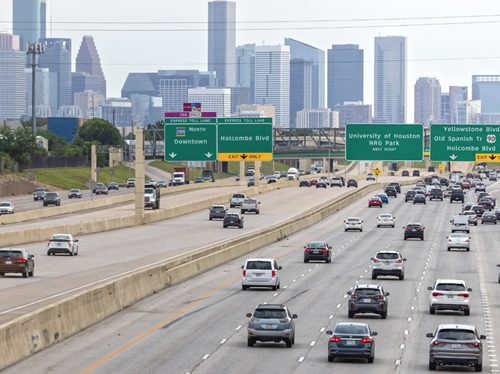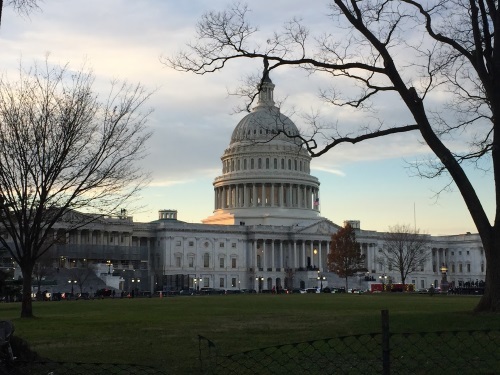
The American Association of State Highway and Transportation Officials spearheaded an effort involving 11 other major trade groups in sending a letter to Congress on April 6 expressing their “strong support” for preserving in the next surface transportation bill the longstanding state-administered formula-based federal transportation program that underpins the efficient delivery of safety and mobility projects and programs across the country.
[Above photo by AASHTO]
The letter stressed that state departments of transportation direct about 85 percent of federal highway formula dollars, with local governments directing 15 percent of those dollars – a funding balance that should serve as the foundation in the reauthorization bill, since state-owned roadways and bridges carry about 70 and 90 percent of nationwide traffic, respectively.
“Local governments are indispensable partners and we acknowledge that they are seeking to increase their portion of federal formula funding in the next bill,” the letter noted. “However, the need for more federal funding is equally true for state DOTs – especially in light of a recent increase in construction costs.”
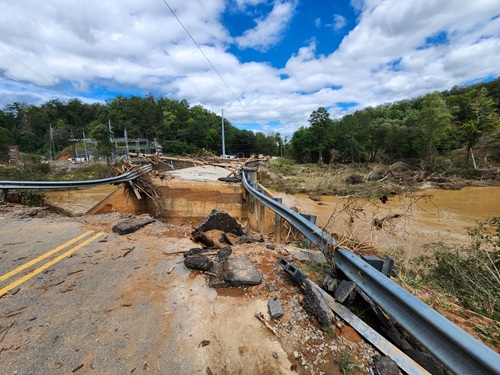
As the backbone of the federal-aid highway program, state DOTs are required by law to plan at a systemwide level, coordinate across modes and jurisdictions, and provide transportation-specific technical and financial expertise that results in tangible project benefits each day, the letter stated. And when hurricanes, floods, wildfires, or supply-chain disruptions occur, it is state DOTs that mobilize quickly to support local governments, restore connectivity, and keep people and goods moving.
“Local governments – especially rural and smaller cities – often face challenges meeting [the] complex requirements necessary to deliver federally funded projects,” the letter added. “For example, 81 percent of unspent dollars in the federal Surface Transportation Block Grant Program last fiscal year came from the locally controlled portion.”
Yet states also fully recognize the important transportation needs of localities, the letter explained, as states have provided over $24 billion annually in more flexible state funding for local projects – on top of the $9.4 billion worth of federal formula funds controlled by localities.
“Fragmenting the state-based formula model risks more federal resources sitting idle rather than accelerating the delivery of important transportation projects, compared to the current balance of federal and state funds that enable coordinated and timely multimodal investments that advance safety, mobility, and economic benefits locally and nationwide,” the letter stressed.
“The foundational pillar of the next surface reauthorization bill should be a robust bill that grows investment levels, and our organizations share a strong interest in ensuring federal transportation investment is deployed efficiently, predictably, and without delay,” it noted.
 Top Stories