



The Illinois Department of Transportation recently issued a formal request for proposal or RFP to find a firm willing to assist the agency with the creation of the Northern Illinois Transit Authority or NITA.
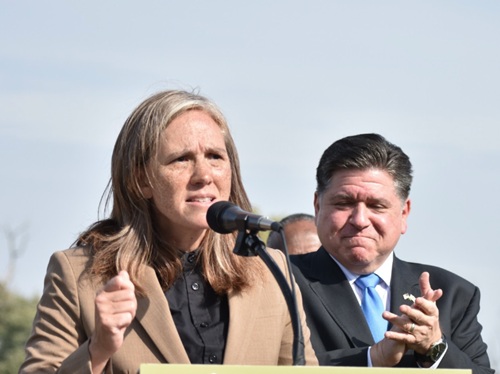
[Above photo by Illinois DOT]
Created by legislation signed into law by Gov. JB Pritzker (D) in December 2025, NITA will strengthen and modernize public transit across Illinois by consolidating oversight of the Chicago Transit Authority (CTA), light rail provider Metra, and bus operator Pace, while delivering significant investments in public transit, capital projects and tollways across the state.
The bill created $1.5 billion in transit and infrastructure funding annually without any new statewide taxes and helped transition transit riders through significant reforms. The bill also offered targeted support for communities outside Chicago and the suburbs, ensuring that transit systems across the state are stabilized and improved.
With broader oversight abilities under the new law, NITA aims to deliver improved service planning, fare collection capabilities, capital programming and operational oversight over a vast transit network that covers 4,700 miles and provides 373 million rides a year. The new law represents the most meaningful reform in decades for the country’s third-largest transit system.
“Illinoisans deserve a world-class transportation system — one that is reliable, expansive and safe,” said Gov. Pritzker in a statement. “This represents an important first step in implementing historic transit reforms and we look forward to seeing NITA come to fruition in service to the people of Illinois.”
“We are proud to take this important step to improving transit in the region and throughout the state,” added Gia Biagi, Illinois DOT secretary. “We look forward to working with our transit partners, elected officials, stakeholders and the public to deliver the governor’s vision for safe, reliable and efficient transit for all of Illinois.”
With the release of this RFP, the state of Illinois is implementing the first major step in this historic transit plan. Gov. Pritzker signed the landmark legislation in December, avoiding drastic service cuts and bringing stability and new investment to transit systems throughout Illinois
Illinois DOT noted that the firm ultimately selected by the RFP firm will provide subject matter expertise, guidance, and recommendations to help centralize key functions and bring efficiencies to CTA, Metra and Pace as they move under the oversight of NITA. The firm also will advise Illinois DOT on the organizational design of NITA, CTA, Metra and Pace, assist with onboarding of NITA board members, support the search for NITA’s executive director and provide an implementation roadmap of the NITA Act.
That work will culminate in a report with actionable items to the governor and the General Assembly in 2027, Illinois DOT said.
In addition to this RFP, the agency said it will continue to implement its other responsibilities for the transition to NITA – including establishing two new committees to increase coordination between downstate transit agencies and integrate transit-supportive design into highway project decision-making. Illinois noted that it released a separate RFP for a consultant to provide administrative support to the development of these committees.
Other state departments of transportation are also currently engaged in related transit planning initiatives.
For example, the Iowa Department of Transportation is encouraging the public, public transit agencies, local governments, and other interested stakeholders to review and provide comments by April 21 regarding the draft of its just-released Public Transit Long-Range Plan.
Iowa’s public transit systems play a vital role in supporting mobility, economic opportunity, and quality of life for residents in both urban and rural communities, the agency explained in a statement, and the Public Transit Long Range Plan provides an overview of Iowa’s transit networks, identifies current and future challenges, and proposes strategies to enhance accessibility, efficiency, and coordination among transit agencies.
 States
California Allocating $900M in Multimodal Investments
March 27, 2026 States
