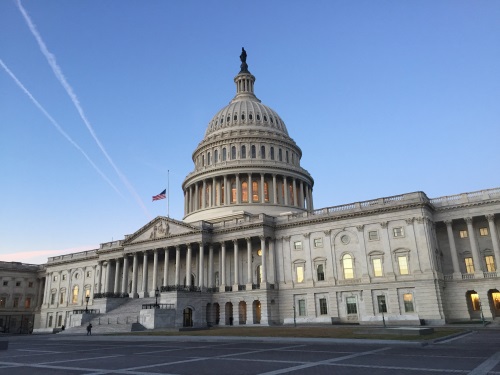
Key committees within the House and Representatives and Senate approved their respective versions of the Water Resources Development Act or WRDA of 2026, which covers the nation’s ports and harbors, inland waterway navigation system, flood and storm risk management needs, environmental concerns, and other aspects of U.S. water resources infrastructure.
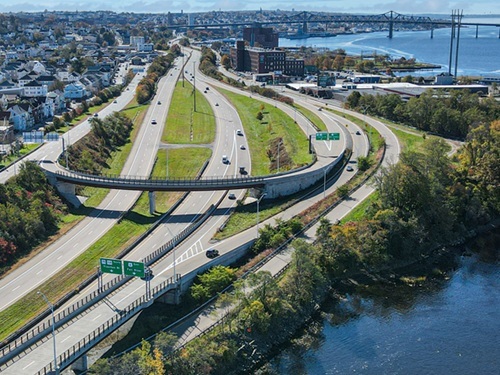
[Above photo by AASHTO]
Any differences in the House and Senate versions must be reconciled in order to enact this biennial legislation, which Congress has been able to pass on time in recent years.
A key similarity between both the House and Senate versions of this bill is that they have approved policy changes to allow more flexibility for use of alternative project delivery methods and more latitude for non-federal entities to partner on dredging and other water resource activities. That participation by “non-federal entities” is viewed as a way to help reduce project costs and enable project participants to be both “more nimble and more efficient” as well.
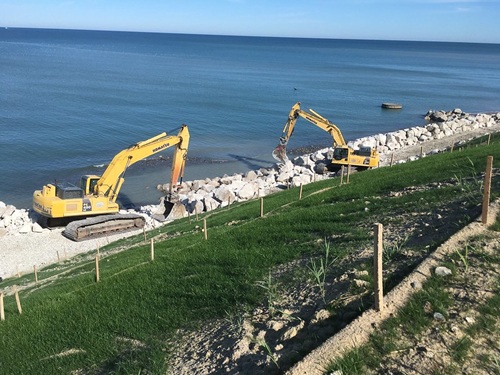
On July 14, the House Transportation and Infrastructure Committee unanimously passed its version of the WRDA bill – called H.R. 9497 – which gives a green light to 133 new feasibility studies for locally proposed water resources infrastructure projects, while providing a full go-ahead for 14 projects vetted by the U.S. Army Corps of Engineers (USACE) that are ready for Congressional construction authorization.
Additionally, the House version of the WRDA 2026 bill includes various policy changes to improve infrastructure project delivery, which includes strengthening and reauthorizing alternative project delivery programs, emphasizing the input of non-federal interests for project feasibility studies, and helping ensure non-federal interests can find the right USACE resources to get projects off the ground – accentuated by encouraging the USACE to use multi-year project contracts.
The bill also seeks to improve the partnership between the USACE and non-federal interests by establishing offices with expertise on inland navigation, alternative delivery, water supply, and technical assistance.
Meanwhile, on July 15, the Senate Environment and Public Works Committee unanimously passed a slightly different version of the WRDA 2026 bill – dubbed S. 4949 – which only authorizes 61 project feasibility studies, though it does approve 15 new or modified construction projects as opposed to the 14 in the House bill.
Notably, the Senate’s WRDA 2026 bill reauthorizes the Environmental Protection Agency’s drinking water and wastewater infrastructure programs, including State Revolving Funds or SRFs.
Specifically, the Senate’s bill provides $16.5 billion for the drinking water SRF and $14 billion for the clean water SRF, both between 2027 and 2030, along with $260 million for the Water Infrastructure Finance and Innovation Act.
Jim Tymon, executive director of the American Association of State Highway and Transportation Officials, said that timely passage of the WRDA 2026 bill by the House T&I and Senate EPW committees represents “an important step” toward continuing the biennial WRDA cycle for addressing critical waterway issues and investments. He added that the committees’ support for improved processes for non-federal sponsors is critical as well – especially for the nation’s state departments of transportation.
“AASHTO looks forward to working closely with Congress on pushing this important bill forward towards enactment,” Tymon said.