


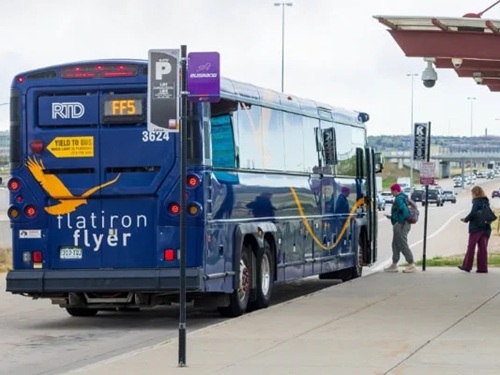
The Colorado Clean Transit Enterprise or CTE recently issued a $44 million grant to the Regional Transportation District – the public transit agency for the Denver metropolitan area – to expand several RTD-sponsored bus routes, including the Flatiron Flyer service between Denver and Boulder.
[Above photo by Colorado DOT]
That grant funding from CTE, a state-owned enterprise under the Colorado Department of Transportation, is expected to support nearly four million additional transit rides in 2027 and make transit more convenient and accessible across the Denver metropolitan area.
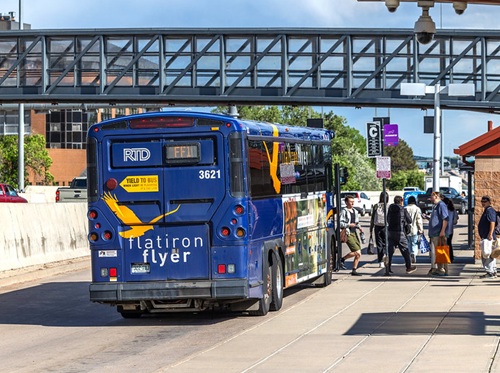
As the improvements mature, RTD projects the enhanced service could ultimately support more than 6.5 million additional rides annually, noted Shoshana Lew, Colorado DOT’s executive director.
“The Flatiron Flyer has historically been one of the most well-used commuter transit routes along the Front Range, and was part of Colorado DOT’s commitment to adding transit options and improving air quality when US 36 was expanded,” she said in a statement.
“Adding long-needed frequency to this important route — alongside other improvements — is an important step that will give people more choices quickly,” Lew added. “More frequent service, better connections and expanded hours mean more people can count on transit to get to work, school, appointments, entertainment, and other destinations. These investments also advance Colorado’s broader goals of providing more transportation choices, reducing congestion, and improving air quality.”
The RTD service improvements supported by that funding are designed not only to increase the number of trips the transit agency can provide but also to make the overall transit network more useful, she noted, as shorter headways can reduce the amount of time customers spend waiting for buses and trains, while longer operating hours and expanded routes can make transit viable for more trips and more people throughout the day.
Funding also will give RTD additional flexibility to provide service for high-volume events that generate increased transit demand, including the Sundance Film Festival, major concerts and Denver Broncos games.
“Transit works best when it is frequent, reliable and connected to the places people need to go,” said Angel Peña, RTD deputy CEO. “This investment allows RTD to put state dollars directly into service improvements that will make a difference for customers, including shorter waits, longer service hours and stronger connections to jobs, school, health care, the airport and major regional destinations.”

Other state departments of transportation also recently issued new funding to support transit services in their respective parts of the country.
For example, the Illinois Department of Transportation is now accepting grant applications for $100 million in funds through October 30 from transit providers to support projects that expand and improve transit, increase transportation options, and enhance quality of life in downstate communities.
In September, the Massachusetts Department of Transportation issued a total of $4.4 million through its “Microtransit” and “Last-Mile Transit” grant programs to help Regional Transit Authorities or RTAs and municipalities fill gaps in traditional public transportation service: particularly in communities where fixed-route service may not reach every neighborhood or destination.
And in August, the Texas Transportation Commission approved more than $154 million in combined state and federal funding to help provide access to safe, reliable transit options statewide to connect people in rural and urban communities to jobs, schools, medical care, groceries, and other essential services.
The Texas Department of Transportation will oversee the disbursement of that funding to 77 public transit and non-profit agencies; funds that will specifically help them expand services for seniors and people with disabilities, improve mobility options, deliver modern infrastructure, and enhance existing transit services.
 States
Tim Gatz Stepping Down as Oklahoma DOT Director
October 9, 2026 States
