


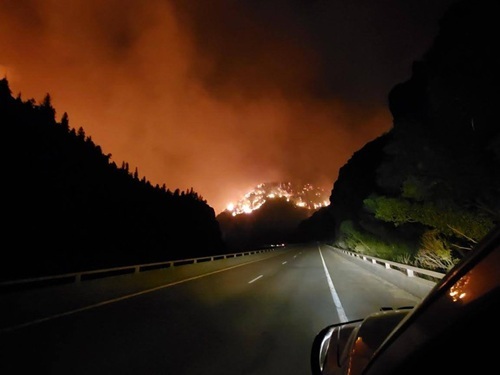
Meteorologists with the Colorado Department of Transportation are warning of an “above normal” potential for significant wildfires across much of the state, but especially in the mountains and foothills, this summer. As a result, the agency is taking proactive steps to reduce wildfire risk along Colorado’s highway network.
[Above photo by Colorado DOT]
The main effort is focused on accelerating its roadside vegetation management program, the Colorado DOT said – expanding coordination with partner agencies and putting contingency plans in place to protect travelers and communities if fire conditions deteriorate this summer.
Dry, unmowed grass and dense brush along highway shoulders are among the most common ignition points for roadside wildfires, the agency said. A spark from a trailer chain, a hot catalytic converter or a vehicle fire can spread rapidly in drought conditions.
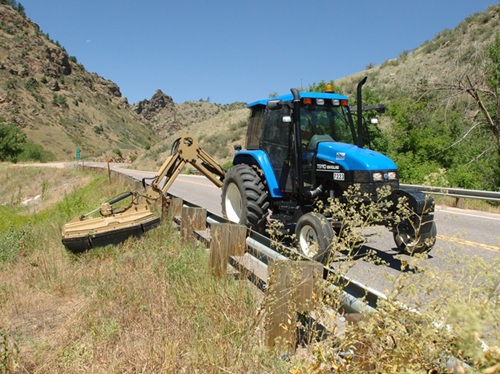
To stem that threat, Colorado DOT maintenance crews are already accelerating mowing, brush clearing, and vegetation treatment along high-priority corridors, with a focus on areas identified as elevated fire threat zones by the Colorado Division of Fire Prevention and Control. Those areas include El Paso/Teller counties to Larimer County, Jefferson to Garfield counties and Montezuma, La Plata, Archuleta, Dolores, and San Miguel counties.
Colorado DOT is also expanding the use of herbicide treatment and mechanical brush removal along road shoulders in areas where topography and traffic volume increase ignition and spread risk – creating clear breaks that can slow or stop a fire from spreading into surrounding wildland.
On mountain corridors including US Highway 6, Colorado Highway 72, US Highway 160, US Highway 285 and portions of Interstate 70, vegetation management is being coordinated with federal and local land managers to ensure treatments extend beyond CDOT’s right-of-way where feasible.
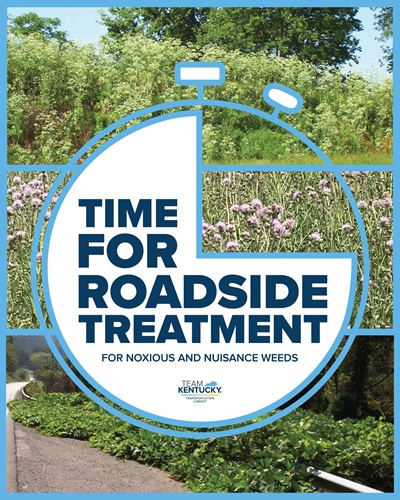
[Editor’s note: Other state departments of transportation also recently activated similar vegetation management efforts along the roadway networks in their respective regions. For example, the Kentucky Transportation Cabinet recently kicked off its annual effort to remove harmful and invasive vegetation from along roadsides across Kentucky.]
“Our highway corridors run through some of the most fire-prone landscapes in the country,” said Bob Fifer, Colorado DOT’s deputy director of operations, in a statement.
“We have a responsibility not only to keep roads open, but to make sure our right of way isn’t contributing to the fire problem,” he pointed out. “This year, with drought conditions already taking hold across Colorado, we’re moving earlier and working harder to get ahead of the risk.”
He noted that Colorado DOT is also an active participant in the state’s emerging multiagency drought response, working alongside Colorado State Patrol, Colorado State Fire Chiefs, county emergency managers and local fire departments to share risk information and align response protocols.
The agency’s regional maintenance and operations centers also maintain standing communication channels with local incident management teams and have pre-positioned equipment in areas where roadway access could be critical to evacuation or suppression efforts.
Colorado DOT said it has also coordinated with the Colorado Division of Homeland Security and Emergency Management to ensure highway closure and traffic management protocols are current for potential fire-related incidents, including rapid deployment of variable message signs, coordination of alternate routes, and public notification through COtrip.org and the COtrip Planner app.
 States
California Allocating $900M in Multimodal Investments
March 27, 2026 States
