


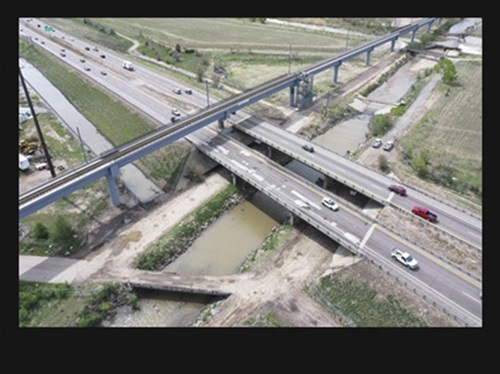
Governor Jared Polis (D) and the Colorado Department of Transportation recently hosted a groundbreaking ceremony for the $806 million I-270 Corridor Improvements project. That project seeks to improve safety, travel time reliability, freight operations, and multimodal connectivity on an east-west span of I-270 between Adams County and north Denver.
[Above image by the Colorado DOT]
The Colorado DOT said work on the I-270 Corridor Improvements project will begin this fall, with major bridge construction starting in the spring of 2027. The project is expected to wrap up in 2033, the agency added.
“I-270 is a road that serves many roles at once. It carries commuters to and through Adams County, it carries significant freight, and it is badly in need of investment so that it can do its job safely,” said Shoshana Lew, Colorado DOT executive director, in a statement.
“With more than 100,000 vehicles depending on it daily, I-270 is a short highway with an outsized role, linking I-25, I-70 and I-76, moving workers to jobs, freight to market and families across the north-metro area,” she added.
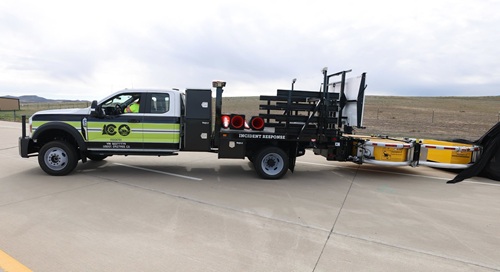
[Editor’s note: In a related event, the Colorado DOT touted the state’s emergence as a leader in Traffic Incident Management and unveiled new crash protection trucks, which motorists will initially start seeing on highway work zones outside of Denver on a 24/7 basis.]
“By completing this work in phases, we’re working to ensure this important highway gets the upgrades it needs while keeping traffic moving for the Coloradans who depend on I-270,” noted Gov. Polis.
“This project will benefit Colorado by relieving congestion and improving freight movement, including the transport of fuel critical to the state’s economy,” emphasized Federal Highway Administrator Sean McMaster. “We’re excited to get shovels in the ground for this investment that will make travel safer and reduce commuting times on the corridor.”
Key features of the I-270 Corridor Improvements project include:
- Replacing 12 aging bridges built in the 1960s and rebuilding the Vasquez Boulevard interchange.
- Adding one new tolled Express Lane in each direction of I-270 – free for buses, motorcycles, and carpools of three or more – alongside two general-purpose lanes along with the addition of four new Regional Transportation District or RTD bus stops near the Quebec Street interchange.
- Improving ramps at I-76, York Street, and Quebec Street to reduce merging and weaving crashes, while adding a continuous auxiliary lane on I-270 between Vasquez Boulevard and York Street.
- Widening shoulders and adding emergency turnarounds so crashes and breakdowns can be cleared more quickly and safely.
- Building a new pedestrian and bicycle bridge over I-270 between East 56th Avenue and Quebec Street; improving connections to the South Platte River and Sand Creek trails; plus adding with new sidewalks, multi-use paths, and safer crossings at Brighton Boulevard, East 56th Avenue, York Street, Vasquez Boulevard, and South Sandcreek Drive.
“We’re excited to get started on a project that will replace bridges at the end of their service life, widen shoulders and fix dangerous merges to reduce crashes and injuries, and build an Express Lane in both directions of I-270 to deliver peak travel time savings,” said Jessica Myklebust, transportation director for Colorado DOT Region 1.
“But this project is more than just steel and asphalt,” she stressed. “It comes with commitments shaped by the neighborhoods along the corridor, resulting in a community-first mentality as we deliver this important project.”
Those commitments include:
- Support for greener streets, parks, and trails, which includes more trees, shade, public art, and natural screening between neighborhoods and local industry.
- Building a highway that better fits the context of the community through plantings, landscaping, and public art.
- Monitoring, measuring and reporting on air quality before, during, and after construction.
- Investing in community led projects that reach past the highway and into the places where people live, learn, and play.
- Expanding transportation options for corridor residents to improve access and mobility.
- Reducing the effects of truck traffic on nearby neighborhoods through more efficient freight travel.
- Investing in the local workforce and supporting corridor businesses through construction.
 States
Hawaii DOT Fostering Young Stormwater Professionals
October 30, 2026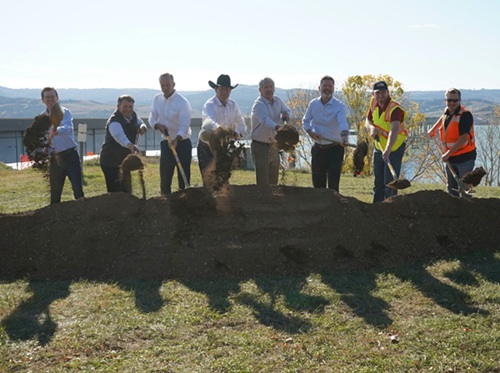 States
