


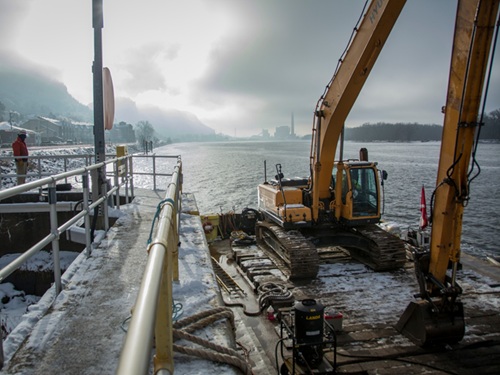
The American Association of State Highway and Transportation Officials recently sent a letter to the leaders of key House of Representatives and Senate committees with water infrastructure oversight to recommend several priorities for the reauthorization of Water Resources Development Act or WRDA legislation.
[Above photo by USACE]
AASHTO noted that its Council on Water Transportation developed a common set of policy priorities for WRDA, with the AASHTO Board of Directors approving a policy resolution including those priorities in November 2025 at the organization’s Annual Meeting in Salt Lake City.
“AASHTO supports timely and robust reauthorization of WRDA to foster continued investment in our nation’s waterways and policy improvements to ensure the best use of the dollars invested in this infrastructure,” the letter said. “AASHTO hopes that your committees will consider these recommendations as you develop the next WRDA bill.”
Some of the major WRDA priorities outlined in AASHTO’s letter include:
- The Corps Water Infrastructure Financing Program (CWIFP) should be revised to match other federal loan and loan guarantee program practices with regard to federal shares of certain projects as currently allowed under the Transportation Infrastructure Finance and Innovation Act or TIFIA program.
- Congress should direct future appropriations laws to include an expansion of access for the U.S. Army Corps of Engineers (USACE) to TIFIA financing for broader types of projects that are currently eligible under the program. The current limits on CWIFP to non-federal dam safety projects and levees place unnecessary restrictions on access to federal dollars for the projects originally contemplated when TIFIA was enacted.
- Building on the successes of the existing National Environmental Policy Act Assignment program for federal highway projects, Congress should establish a similar program under the Secretary of the Army and USACE under which a state DOT would be allowed to assume responsibility for Clean Water Act Section 404 permitting and compliance for 33 U.S.C. 1344. The efficiencies achieved through the establishment of such a program would enhance project delivery through streamlined permitting processes.
- To better facilitate the movement of barges, USACE should increase the restriction on dredging from 9 feet to 12 feet. This improvement is necessary for the continued movement of freight on inland waterways.
- USACE should develop a comprehensive and transparent database of the location of utility lines and other underground infrastructure located within a port, channel, or marine highway. There is a significant lack of information on these items and the discovery of such information when a project already is underway creates needless delays and increased costs.
- For low-use river designations, USACE should collect current, real-time data electronically and ensure that all tonnage is collected and attributed fairly to the correct entity. This includes ports, port districts, and port statistical areas. Current data collection methods are inadequate and outdated.
- Addressing emergency dredging needs currently lacks a consistent approach at the federal level due to a lack of a definition of what constitutes an emergency dredging situation. Thus, Congress should examine current definitions and procedures and develop necessary revisions to the law to ensure consistent and sound practices to properly maintain navigable waterways in emergency situations.
 Top Stories
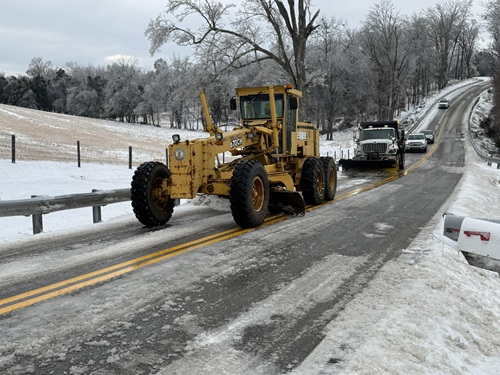
Multi-Day Response by State DOTs to Winter Storm Fern
January 30, 2026 Top Stories
