


The American Association of State Highway and Transportation Officials recently provided comments to the Environmental Protection Agency regarding the EPA’s updated definition of Waters of the United States or WOTUS; expressing “the need for clear standards to determine the jurisdictional status of their stormwater and drainage assets, ensuring that the rule clearly excludes them from the regulatory requirements of WOTUS.”
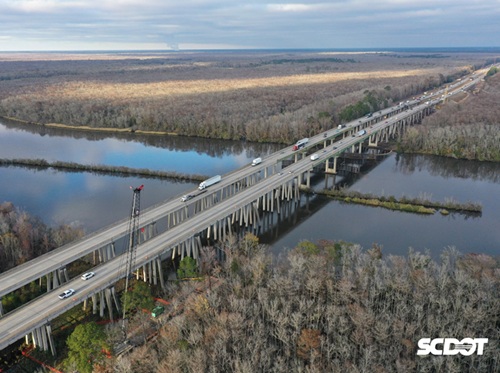
[Above photo by the SCDOT]
“Although AASHTO recognizes the intention of the proposed rule to exclude roadside ditches and stormwater control features from the definition of WOTUS, we believe the proposed rule’s use of
hydrology, topography, soils, and precipitation conditions as a characteristic for the definition fails to resolve the uncertainty in the definition’s application,” the organization said in its letter.
“Use of terms such as, ‘wet season,’ ‘dry land,’ and ‘upland’ without further definition, context, or guidance presents circumstances for state departments of transportation that will disrupt planning, construction, operation, and maintenance of their systems.”
In previous comment letters, AASHTO said it recommended language for a WOTUS definition that would be both “appropriately protective of aquatic resources” and “straightforward” for state DOTs to understand and apply – and the lack of such language could create an additional burden for state DOTs, hampering project delivery.
“Each year, state DOTs invest hundreds of billions of dollars in expanding and improving their systems. Further, state DOT projects often must address safety and operational issues by relocating,
widening and shaping ditches, making these operations critical to highway safety,” AASHTO said. “These projects often take months to years to plan and budget, with budgets and schedules heavily dependent on environmental permitting and compliance certainties.”
AASHTO also stressed that when deploying federally funded transportation projects, the “layering” of various requirements over the years – as seen in WOTUS regulations – has resulted in “time-consuming reviews and back-and-forth interactions” that not only delay projects but also substantially add to their cost.
“We believe this [WOTUS] rulemaking represents an opportunity to improve the federal project delivery timeline for the sake of our communities who are waiting on these important projects to improve their quality of life,” the organization noted.
 Top Stories
Congressional Leaders Detail Key Transportation Priorities
February 27, 2026 Top Stories
