


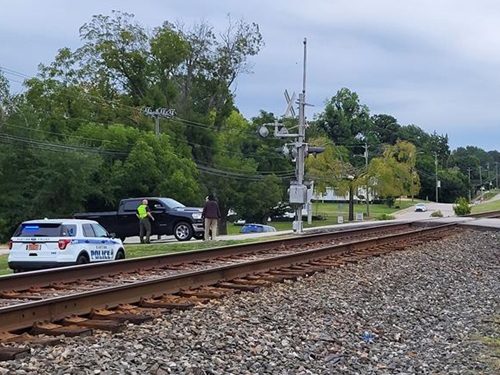
Across the country, state departments of transportation recently engaged in a wide range of efforts to promote railroad safety as part of the annual “See Tracks? Think Train® Week” outreach campaign – formerly known as Rail Safety Week – across North America September 21-27; an event sponsored by Operation Lifesaver Inc., state-level Operation Lifesaver programs, and rail safety partners across the U.S., Canada, and Mexico.
[Above image by NCDOT]
First held in the U.S. in 2017, this collaborative rail safety campaign seeks to prevent railroad crossing and trespass incidents across North America while concentrating public attention on the need for rail safety education.
Operation Lifesaver noted that more than 2,300 North Americans die or are seriously injured annually due to unsafe behavior around tracks and trains. As part of the nationwide “See Tracks? Think Train® Week” outreach effort, state DOTs and other organizations issued new video and audio public service announcements, along with social media campaigns.
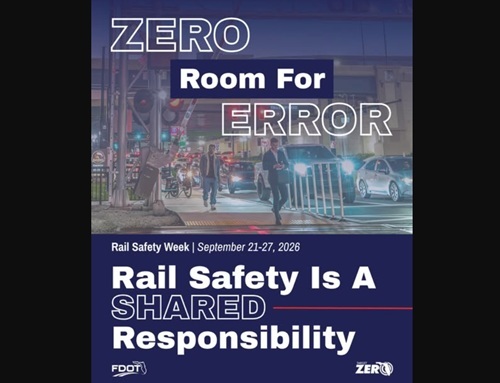
For example, the Florida Department of Transportation highlighted its “multi-pronged” rail safety approach, noting that since 2022, it has invested over $60 million in rail safety projects statewide that included the installation of upgraded pedestrian-activated warning systems, double-gates, and enhanced signage – all part of a long-term effort to overhaul its rail safety standards.
The agency added that those standards are now being accelerated for implementation thanks to a grant issued in August by the Federal Railroad Administration to expedite this work and entirely revamp over 900 rail crossings throughout Florida. The grant will prioritize locations with the highest history of incidents to maximize safety features at crossings that need it most.
In a statement, Florida DOT also noted that it partnered with law enforcement agencies statewide to conduct a “High Visibility Enforcement Campaign” at high-traffic rail crossings as part of its 2026 rail safety week efforts – with law enforcement officers blending education and enforcement efforts to monitor unsafe behaviors and educate the traveling public on how to stay safe around train tracks.
Meanwhile, in North Carolina, BeRailSafe – the North Carolina Department of Transportation Rail Division’s railroad safety program – engaged with the local Clayton Police Department, N.C. Operation Lifesaver, and Amtrak Police to conduct “rail crossing blitzes” to teach motorists and pedestrians about safe behaviors at railroad crossings and how to contact the railroads in case of emergency.
“Meeting people near railroad crossings gives us a chance to share information they can use every day,” said Jason Orthner, director of NCDOT’s Rail Division, in a statement. “We want people to understand what signs and signals mean, where it’s safe to cross and why they should stay off railroad tracks. Reaching people before someone gets hurt is the purpose of this week’s outreach and the work BeRailSafe does year-round.”
The Wisconsin State Patrol conducted a similar effort with railway police partners at five rail crossing locations this week in Superior, WI, during Operation Clear Track, a nationwide education and enforcement campaign that takes place each year during the yearly “See Tracks? Think Train Week” campaign.
In a statement, the Wisconsin Department of Transportation noted that Wisconsin is home to 3,300 miles of active train tracks and that, over the past 10 years, the state suffered 360 train related crashes. Thus, the Operation Clear Track campaign deployed law enforcement officers to remind community members of railroad crossing and trespassing laws and encouraged safe choices around tracks and trains.
And the Colorado Department of Transportation joined with Colorado Public Utilities Commission, Colorado Operation Lifesaver, and local rail safety partners to reinforce rail crossing safety messages during the week as well. The agency noted that, in 2025, Colorado recorded 36 grade-crossing incidents, four fatalities and 13 injuries. Two of those fatalities occurred in Weld County near Nunn, one occurred in Denver and one in El Paso County near Security. Eleven of the 13 people injured were hurt at public crossings, Colorado DOT said.
“Every trip should end safely, whether you’re driving, walking or riding a bike,” stressed Shoshana Lew, Colorado DOT executive director, in a statement. “Railroad crossings are places where one impatient decision can have irreversible consequences. Every traveler has a role: obey the signals, stay off the tracks, and always expect a train.”
 Nation
FHWA Issues $5M in Emergency Funds to Hawaii DOT
September 25, 2026 Nation
