


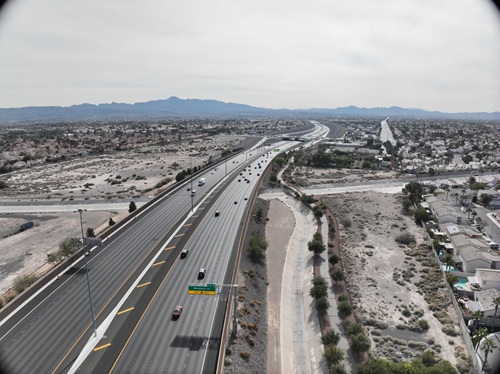
A new study conducted by the AAA Foundation for Traffic Safety found that there is “growing acceptance” of speeding by the public – that it is becoming “normalized” on America’s roadways – alongside growth in public support for speeding countermeasures.
[Above photo by Nevada DOT]
AAA’s survey found that three in 10 drivers agree with that statement, “no one actually drives the speed limit,” while many also considered driving 10 mph over the limit acceptable and nearly half believing keeping up with traffic is safer than obeying the posted limit.
The survey findings also suggest many drivers aren’t speeding simply to save time, AAA said; they’re often convincing themselves that speeding is the right choice for the situation. The top reasons survey respondents provided for speeding were to get around slower drivers (31 percent), to reach their destination faster (25 percent), and to avoid holding up traffic (21 percent).

Meanwhile the top reasons given for slowing down were to avoid getting a ticket (79 percent), to avoid being involved in a crash (72 percent), and bad weather (60 percent).
Dr. David Yang, president and executive director of the AAA Foundation for Traffic Safety, noted in a statement that those attitudes matter because speeding continues to have deadly consequences – pointing to National Highway Traffic Safety Administration data that indicates speeding was a factor in nearly 30 percent of traffic fatalities in 2024.
“Findings from this research show that some drivers in the United States view speeding as a normal part of driving,” Yang said. “When people take cues from surrounding traffic instead of following posted speed limits, it creates a culture that makes crashes more difficult to prevent and roads less safe for everyone.”
AAA’s survey also found that drivers generally prefer countermeasures that encourage safer speeds over those that physically force them to slow down. Drivers expressed strong support for increased police presence in areas with a history (87 percent) or potential (88 percent) for speed-related crashes, and roughly seven in ten respondents supported automated speed cameras in those locations.
Drivers also viewed advisory Intelligent Speed Assistance technology – in-vehicle warnings or alerts when a driver exceeds the speed limit – more favorably than technologies that automatically limits vehicle speed.
“There is no silver bullet for addressing traffic safety risks caused by speeding,” Yang stressed. “Understanding which strategies drivers are most willing to adopt can help policymakers and safety professionals develop interventions that are both effective and publicly acceptable.”
 Top Stories
Approval Given to Tennessee’s I-24 Choice Lanes Project
August 21, 2026 Top Stories
