


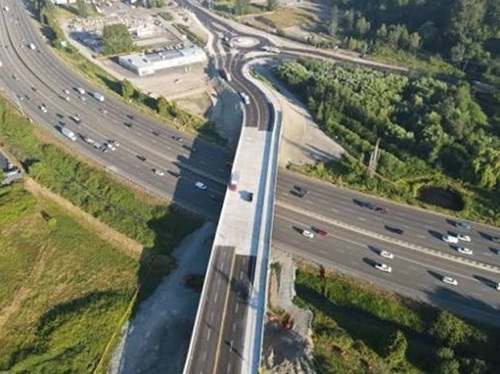
The Washington State Department of Transportation recently hosted an event celebrating the “beginning of the end” of the State Route or SR 167 Completion Project in Pierce County, which is part of WSDOT’s Puget Sound Gateway Program.
[Above photo by WSDOT]
The event marked the start of the fourth and final stage of the SR 167 Completion Project – scheduled to be finished by September 2029 – that completes a critical “missing link” in the state’s highway network by providing a more direct link to and from the Port of Tacoma for freight shipments.
The project includes construction on the last 2.6-mile segment of the new SR 167 Expressway, or Stage 2b; a section of highway between North Meridian Avenue in Puyallup and I-5 in Fife that represents the final part of the six-mile tolled expressway that will stretch to SR 509 near the Port of Tacoma.
“By improving key freight corridors, we’re strengthening our economy, supporting family-wage jobs, and ensuring goods move efficiently throughout the region,” noted Julie Meredith, WSDOT secretary, in a statement. “Just as importantly, these improvements make travel safer and more reliable for the people who live and work here every day.”
[Editor’s note: A recent video by the Utah Department of Transportation highlights how “structural pothole patching” will extend the life of the 5600 West bridge over I-80.]
“The SR 167 Completion Project is also a testament to close collaboration with our partners,” added Ricky Bhalla, administrator for the Puget Sound Gateway Program.
“The Puyallup Tribe of Indians, the Port of Tacoma, legislators, Pierce County, and the cities of Fife, Tacoma, Edgewood, Sumner and Puyallup all played vital roles,” Bhalla said. “Other local and state agencies and people who live and work here joined us to imagine, design, fund, and build this project.”
WSDOT stressed that the SR 167 Completion Project is located entirely with the Puyallup Tribe’s lands, so a strong partnership with the tribe and their engagement throughout construction is considered key to the successful completion of this project.
“This project provides benefits beyond travel,” emphasized John White, WSDOT assistant secretary for urban mobility, access, and mega-programs. “Crews have rehabilitated more than 150 acres of wetlands, built new trails and completed connections to existing regional and local trails. This is truly a project that produces benefits not just for freight, but also enhances access for people who walk, bike and roll, while also supporting fish and wildlife habitat for years to come.”
 States
