


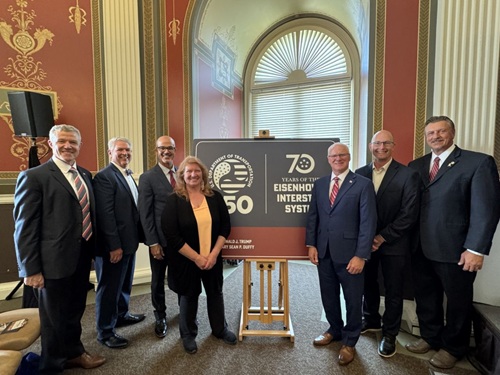
The Federal Highway Administration recently launched a nationwide initiative asking Americans to help the U.S. Department of Transportation address critical highway infrastructure needs.
[Above photo via USDOT]
That national effort, entitled the “Reimagining America’s Interstates” initiative, is collecting comments on new interstate facility suggestions, feedback on major upgrades needed on existing routes, and how the system can better meet the needs of the 21st-century traveling public.
The FHWA announced this new initiative during a media event on June 30 that also celebrated the 70th anniversary of the “Dwight D. Eisenhower National System of Interstate and Defense Highways,” created when President Dwight Eisenhower signed into law the Federal Aid Highway Act of 1956, along with the unveiling of “Freedom 250” highway signs in celebration of that anniversary.
[Editor’s note: A recent blog post by the Georgia Department of Transportation chronicled how the interstate system envisioned by President Eisenhower became reality.]
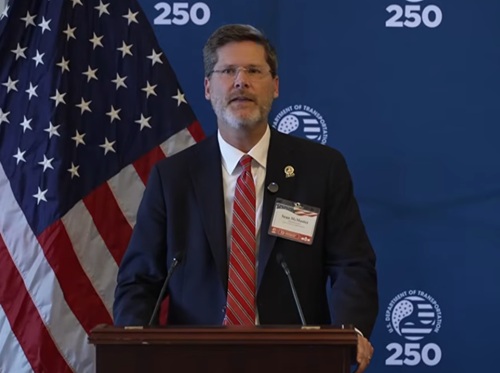
“After having propelled America into prosperity for 70 years, it’s time to envision how our nation’s interstates can better serve a modern economy,” said Sean McMaster, FHWA administrator, in a statement.
“This nationwide call for public comment is the next step in addressing modern challenges of our Interstate Highway System,” he said. “We want the American people to help us build a system that conquers today’s challenges and secures tomorrow’s growth.”
The agency said it plans to publish a “Request for Information” soon in the Federal Register so it can better understand how the system is currently functioning, where to construct new interstate facilities, what major upgrades are needed for existing routes, and how the system can better meet the needs of the 21st-century traveling public.
The RFI will feature 21 targeted questions addressing critical emerging issues, including freight growth and the integration of new technologies.
Concurrently, FHWA is inviting states to display the new “Freedom 250” signs as part of the USDOT’s broader Freedom 250 initiative – a national effort that Steven Bradbury, USDOT deputy secretary, said celebrates the history, principles, and enduring promise of liberty that defines the nation.
“The new ‘Freedom 250’ highway signs stand for more than just historical milestones; they celebrate the very principle of freedom of movement that defines our nation,” he noted.
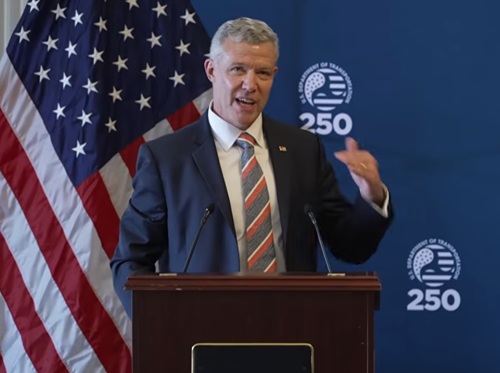
“As we look toward the future with our ‘Reimagining America’s Interstates’ initiative, we are proud to champion a highway network that matches the greatness, ambition, and enduring spirit of the American people.”
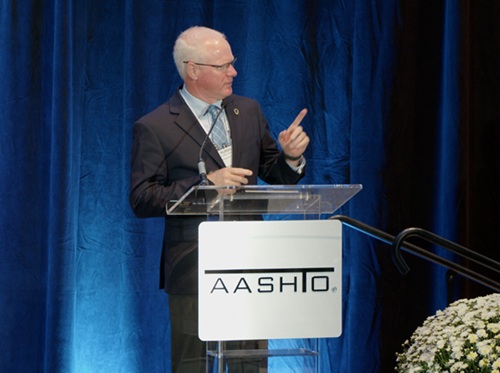
Jim Tymon, executive director of the American Association of State Highway and Transportation Officials, noted at the event that while 2026 “is a big year for America,” in terms of marking of 250th anniversary of its founding, but also specifically for the country’s transportation sector as well.
“Not only are we celebrating the 70th anniversary of the interstate highway system; we are also celebrating the 100th anniversary of the establishment of the nation’s highway numbering system,” he said.
“AASHTO as an organization served in a key role to ensure we could designate road systems so states could come together and establish a system of roads that could connect at state borders to provide that seamless interstate travel,” Tymon stressed.
Russell McMurry, AASHTO’s president and commissioner of the Georgia Department of Transportation, added that few public works projects have shaped the United States as profoundly as the interstate highway system.
“It is truly the backbone of America mobility, commerce, and national defense,” he said. “And behind this achievement is a story about how we turned national challenges into national opportunities.”
Marc Williams, AASHTO’s vice president and executive director of the Texas Department of Transportation, echoed that theme by noting “when you drive on the interstate highway systems, you are traveling on one of the greatest civic investments in history. Our responsibility now is to protect and invest in that legacy; modernizing and preparing it for future generations.”
Tracy Larkin Thomason, director of the Nevada Department of Transportation, echoed Williams’ point – stressing that “while we honor Eisenhower’s vision today, we also have a responsibility to build upon it for tomorrow. Because the reliability and resilience of our interstate system are fundamental to keeping goods moving, businesses operating, and communities connected.”
 Top Stories
AASHTO Safety Summit: Managing Speed with Technology
October 9, 2026 Top Stories
