



The Virginia Department of Transportation recently released a revised Statewide Multiuse Trails Plan, providing a foundation for the development of a connected trail network for the Commonwealth.
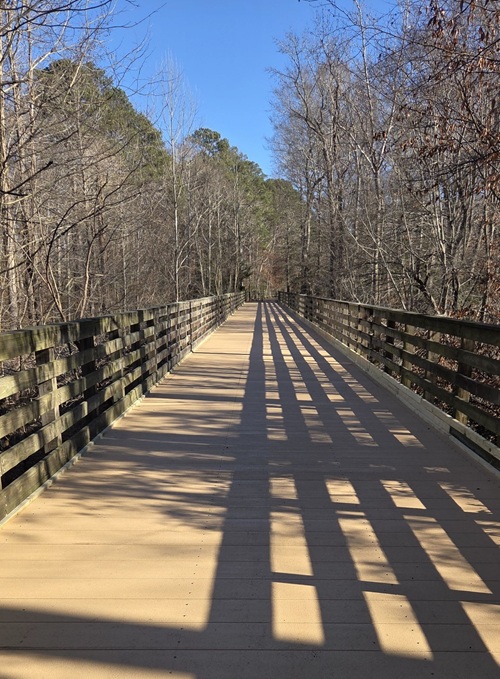
[Above photo by VDOT]
The plan – a culmination of over two years of research – combined public engagement and technical analyses, including a data inventory of over 1,500 current and 2,900 planned miles of trails across Virginia, plus spatial analyses and practical insights for local jurisdictions.
VDOT estimates that full implementation of its trails plan could increase the portion of Virginians living within a half mile of a trail to 50 percent. That compares to 36 percent of all residents now currently living within a half mile of an existing trail. For underserved communities, the number cut nearly in half to 19 percent, VDOT said.
“The actions laid out in the plan support the commonwealth’s vision of a multimodal trail system that enhances connectivity, promotes equitable access, and improves quality of life for all Virginians,” noted Angel Deem, VDOT’s chief of policy, in a statement.
Alongside the release of the trail plan, VDOT’s State Trails Office launched the Resource Hub, designed to lead decision making and continue effective implementation.
Many state departments of transportation are developing trail systems for their respective regions.
For example, the Utah Department of Transportation recently kicked off construction on the first project within the Utah Trail Network; a plan to build 2,600 miles of new paved trails and 500 miles of existing trails connecting communities statewide similar to how highways connect cities.
Meanwhile, in September 2025, the Maryland Department of Transportation unveiled its own statewide strategic plan to map out a “safe, accessible, and connected trail network” for communities across Maryland; a plan that reflects the state’s “broader commitment” to safety, equity, and multimodal transportation in support of both its Complete Streets Policy and Serious About Safety initiative.
 States
Hawaii DOT Helps Celebrate Aloha Tower’s 100th Year
October 23, 2026 States
