


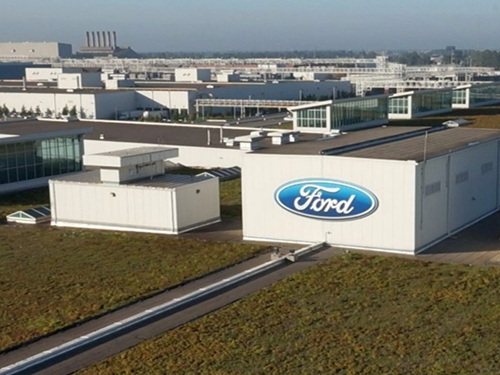
The Tennessee Department of Transportation recently selected Cavnue, LLC, as its private-sector partner for the Memphis/West Tennessee Smart Freight Corridor pilot project – an initiative aimed at improving safety, reducing congestion, and advancing freight technology along I‑40 between Memphis and Blue Oval City; an electric vehicle manufacturing campus in West Tennessee.
[Above photo by Ford Motor Co.]
The agency said this multi‑year pilot project will evaluate several connected and autonomous vehicle or CAV freight technologies in real‑world operating conditions – providing Tennessee DOT with both data and analysis to help it shape long‑term freight modernization strategies for the state.
This project is Tennessee DOT’s first dedicated smart freight initiative, allowing Cavnue to test smart freight technologies in real‑world conditions while the state maintains control of the roadway, data, and future use decisions.
In the coming months, the firm will begin project planning and design work under Tennessee DOT’s oversight and – upon the agency’s approval – the project will advance to temporary on‑road testing, followed by a final evaluation to inform future freight and infrastructure decisions.
Tennessee DOT said this pilot program is expected to run through 2028 – a timespan that includes planning, design, installation, testing, and up to one year of performance evaluation.
“This pilot strengthens one of our most important freight corridors and supports continued economic development in West Tennessee,” said Governor Bill Lee (R) in a statement. “By embracing new technology, we’re ensuring our infrastructure keeps pace with the needs of Tennesseans and the industries that drive our economy.”
Will Reid, Tennessee DOT’s commissioner, noted that adopting emerging technologies is essential for strengthening Tennessee’s freight corridors and positioning the state for advancements in autonomous and connected freight systems that improve safety, mobility, and reliability.
“It is an important step toward preparing our infrastructure for the next generation of freight mobility,” he stressed.
 States
Oklahoma DOT Begins $408M Bridge Replacement Project
September 18, 2026 States
