


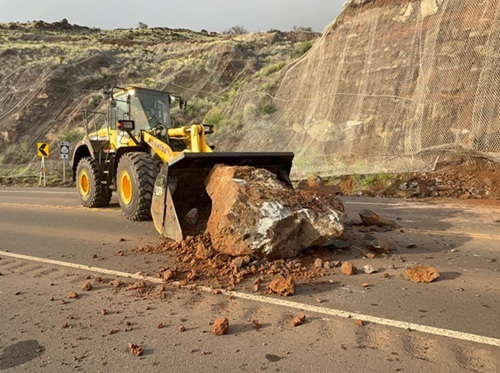
In the wake of a recent low-pressure weather event that triggered considerable flooding, damaging state roadways and other infrastructure, the Hawaii Department of Transportation provided some insights into its storm recovery procedures.
[Above photo by the Hawaii DOT]
“During severe weather events, Hawaii DOT crews monitor drainage systems and bridges and respond to callouts as directed by the emergency operations center in the district as long as it is safe for crews to remain in the field,” the agency explained in a blog post.
“Once the weather system passes, crews check culverts and canals in affected areas, assess barriers and guardrails for damage from debris or high winds, inspect slopes for loose material and trees, and check bridges and pavement in flooded areas,” the agency said. “Closures necessary for safety are put in place and communicated through signage and public updates.”
[Editor’s note: The Texas Department of Transportation recently released a video that outlines how it determines the impact of extreme weather on highway and bridge resilience factors.]
Inspections of bridge footings, supports, and deck structures then follow as the system moves away from the islands, Hawaii DOT noted.
“Hawaii DOT engineers and inspectors check for scour by examining debris lines at bridges, observing changes in stream beds and looking for structure movement or settlement,” the agency said – pointing out that more information about its bridge management tactics is available at https://hidot.hawaii.gov/highways/bridge-management/
If a bridge shows signs of failure, Hawaii DOT will move to keep those traveling over the bridge safe by reducing its posted weight capacity, limiting the route to local traffic or closing the bridge down, the agency noted.
 States
Michigan DOT Issues $65M to Support Transit Projects
October 16, 2026 States
