



The California Department of Transportation – known as Caltrans – recently took “major steps” to strengthen its commitment to public transportation; establishing a new deputy director position for transit and rail programs and restoring its Division of Mass Transportation to help provide faster, more reliable, and connected transit services statewide.
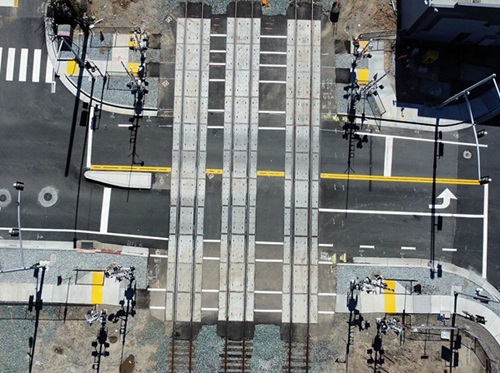
[Above image by Caltrans]
Caltrans also released its first Director’s Policy on Transit to support more coordinated and efficient transit and rail services along the state highway system and, ultimately, improve connections for millions of California riders.
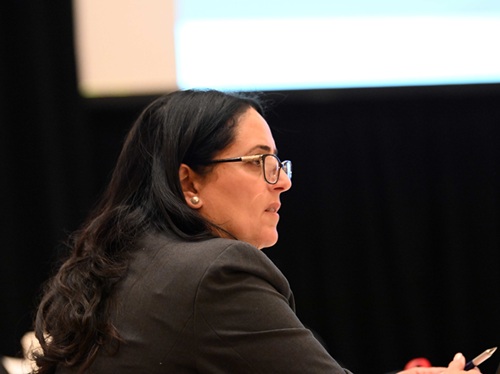
“Caltrans is taking great strides in making our transportation network safer and more efficient by prioritizing transit to improve mobility for Californians of all ages and abilities,” noted Dina El-Tawansy, Caltrans director, in a statement.
“These critical steps will help California achieve its progressive climate, health, equity, and environmental goals while fostering socially and economically vibrant, thriving, and resilient communities,” she said.
[Editor’s note: In January, Caltrans issued $202 million to fund 143 local clean transportation projects; prioritizing projects focused on offering public transit and electric vehicle options. That fiscal support comes from the Low Carbon Transit Operation Program within the state’s California Climate Investment (CCI) fund; designed to reduce greenhouse gases from the largest emission sources in California, drive innovation, and guide the state towards a clean energy economy – particularly in disadvantaged communities.]
El-Tawansy added that the new “director’s transit policy” formally outlines a “vision” for Caltrans to deliver transit priority projects on state highways and enhancing its role in developing transit statewide. It focuses on transit priority facilities such as dedicated bus lanes, signal priority, and other infrastructure to make road-based transit service faster and more reliable on California’s highway system.
The policy aims at improving air quality by reducing the number of cars on the state’s roadways to lower greenhouse gas emissions while prioritizing transit as a “core consideration” in Caltrans’ decision-making processes to ensure all communities enjoy equitable and improved access to transit.
To that end, the new deputy director for transit and rail programs will aim to accelerate the delivery of projects that make public transportation more efficient and accessible. Meanwhile, the revived Division of Mass Transportation, in partnership with Caltrans’ Division of Rail, will work closely with partners to integrate transit into California’s transportation system and support initiatives that make public transportation more convenient and more sustainable.
It will do so in partnership with the new California Transit Advisory Committee or CALTAC, which will advise Caltrans on transit-related matters. CALTAC will consist of 20 member agencies and organizations from a diverse group of transit stakeholders, such as transit agencies, state universities, disadvantaged communities, and transit experts.
 States
