


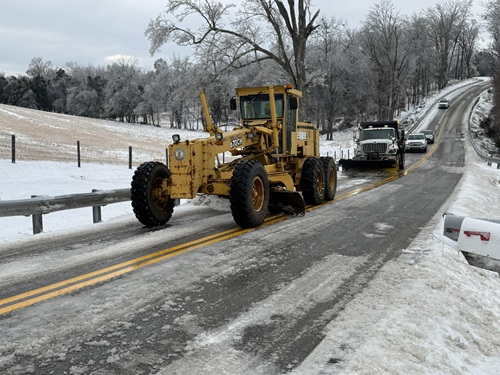
From the Midwest to the East Coast, state departments of transportation engaged in multi-day response efforts to combat a winter storm meteorologists described as “historic” in its impact as, at one point, the massive weather disturbance stretched nearly 2,000 miles from the Mexico–United States border well into eastern regions of Canada.
[Above photo by KYTC]
Twenty-four U.S. state governors ultimately issued emergency declarations in response to what is being unofficially called “Winter Storm Fern,” with winter weather alerts affecting up to 230 million people.
State DOT highway crews and their contractors stayed busy across multiple states for several days clearing roads of ice and snow.
For example, by January 29, Kentucky Transportation Cabinet crews had cleared most interstates and continue to work to open secondary roadways. Since January 22, KYTC said state and contracted plow crews had successively plowed 741,000 miles of roadway; enough to circle the earth more than 29 times.
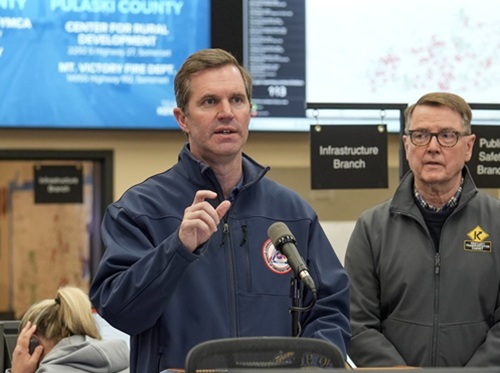
“We are still experiencing dangerously cold temperatures and windchills, which will continue through the week, with windchills [in the] negative to single digits for most of the state until Tuesday [February 3],” noted Governor Andy Beshear (D) in a statement. “During those times, folks need to stay indoors as much as possible and limit outdoor exposure. Even 10 to 30 minutes outside can cause frostbite and hypothermia at the coldest of times.”
KYTC noted that interstates under its jurisdiction are mainly clear, with isolated patches of snow and slush, while some parkways in central and western Kentucky have one lane partially covered due to ice buildup over snow. The agency added that it has deployed heavy equipment, such as road graders, on some primary and secondary routes to help break up layers of ice.
[Editor’s note: The West Virginia Department of Transportation considers road graders to be its “heavy artillery” in the battle to clear ice from state roadways.]
State DOT crews are also offering aid in unique emergency situations as well. The Ohio Department of Transportation, for example, rerouted one of its snowplow operators to help an ambulance crew transfer a sick infant from one hospital to a more specialized facility – ensuring that the ambulance had a clear path all along its journey.
Meanwhile, more than 2,400 North Carolina Department of Transportation employees and contractors have been responding to the storm with trucks equipped with plows and salt spreaders to clear roads from the mountains to the coastal plains, with the hardest hit areas in the mountains and central Piedmont.
Before the winter storm arrived, NCDOT and its contractors spread nearly four million gallons of brine on roads; saltwater solution lowers the freezing temperature of water to about 18 degrees and helps prevent ice from forming on pavement. Since snow began falling on January 23, the agency said its crews and contractors have spread another one million gallons of brine and 58,000 tons of salt while plowing snow and ice from roads plus cutting and removing trees from roads as well as ones that brought down power lines.
[Editor’s note: The video below by the South Carolina Department of Transportation explains why pre-treating roadways with a brine solution helps create a barrier to stop snow from sticking, while making post-storm cleanup easier.]
As part of his state’s storm response, Governor Bill Lee (R) signed Executive Order 111 to give the Tennessee Department of Transportation the ability to assist on non-state roads by clearing routes of snow and ice and removing downed trees.
Tennessee DOT added that it has redeployed additional crews from across the state and mobilized contractors to address locally owned roads as quickly as possible. The agency also noted that its crews are continuing around-the-clock winter operations as part of its coordinated statewide storm response state roadways; a response effort that so far has required: 44,000 equipment hours; 88,400 labor hours; 66,000 tons of salt; 1.5 million gallons of brine; and 2,545 incidents of emergency services rendered to motorists
Further south, the Mississippi Department of Transportation continued operations through the week to keep roads open and traffic moving in the wake of Winter Storm Fern, with ice still being reported on roads, bridges, and overpasses in 37 counties.
“The safety of our crews working in dangerous conditions is always a concern during these extreme weather events,” noted Brad White, executive director of the Mississippi DOT, in a statement. “Because they run the risk of having tree branches and powerlines fall on them, we will continue work where it’s safe. For your safety, we continue to strongly discourage travel unless it’s an emergency.”
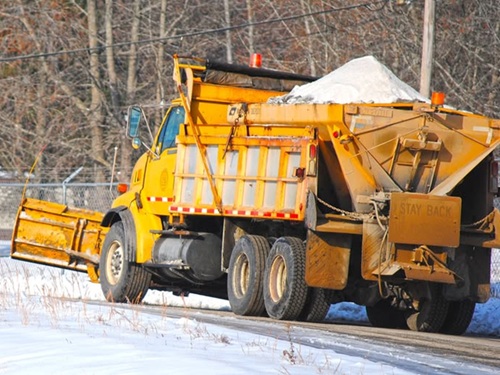
Even as state DOTs continue Winter Storm Fern recovery efforts, several are preparing to deal with a second major disturbance due to arrive on or about January 31.
For example, Georgia DOT is prepping some 570 snow removal units statewide, including 439 snowplows that also function as spreaders and dump trucks, plus an additional 130 heavy-duty pickups equipped with plows and spreaders to handle this second storm. The agency said those units will remain active throughout the storm to help keep interstates and critical routes passable.
Due to the nature of this storm — including large, fluffy snowflakes combined with extremely low temperatures — Georgia DOT said accumulation is expected to continue even after routes have been treated and plowed.
NCDOT said its crews are “regrouping” before this next weather system arrives by restocking salt supplies and pre-treating roads. As of January 29, the agency said crews had placed more than 970,000 gallons of brine on North Carolina’s roads.
“Our crews have been working around the clock this week clearing roads, and we’re now turning our attention back to preparations for more winter weather,” said Daniel Johnson. NCDOT secretary, in a statement. “We appreciated everyone doing their best to keep off the roads last weekend, and we need that same focus again with this storm.”
 Top Stories
AASHTO Comments on 'Corridors of Commerce’ Program
September 18, 2026 Top Stories
