



The Maryland Advanced Air Mobility Council recently issued a new report that includes a phased set of key recommendations to help integrate Advanced Air Mobility or AAM systems into the state’s overall transportation network.
[Above photo by Maryland DOT]
Established in January 2025 via an executive order by Governor Wes Moore (D), the aim of this council – comprised of 12 members, including transportation leaders from across government and academia – is to develop strategic recommendations for integrating new aviation technologies into the current transportation system.
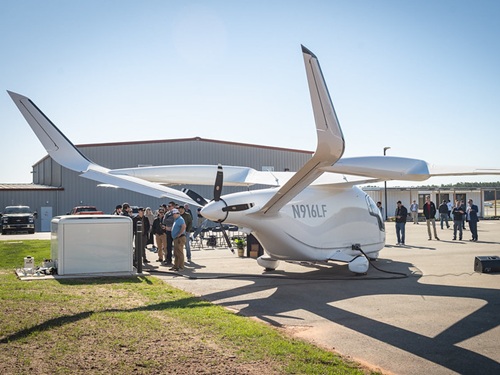
AAM refers to technologies that use highly automated and often electric or hybrid-electric powered aircraft to move people and cargo in ways that enhance the existing transportation network – with the most common AAM systems based around drones and vertical take-off and landing or VTOL aircraft.
The council’s report highlights “societal, economic and environmental benefits” of this emerging AAM industry and offers several recommendations centered on strengths and opportunities that exist within Maryland, including: the state’s geographic location on the Eastern Seaboard; existing aviation facilities and stakeholders; academic and research institutions; a “world class” aeromedical industry; and an educated and technically skilled workforce.
[Editor’s note: Other states have also put together similar “roadmaps” to help guide the development of the AAM industry within their borders, for example, the , the Florida Department of Transportation, and the North Carolina Department of Transportation.]
The report also identifies actions that the state can take in the near-, mid- and long-term, as a roadmap to help Maryland prepare for these new AAM technologies.
John Porcari – the council’s chair and a former deputy Secretary of the U.S. Department of Transportation and former secretary of the Maryland Department of Transportation – noted in a statement that the report’s recommendations also complement the federal Advanced Air Mobility National Strategy.
“Maryland’s Advanced Air Mobility plan positions the state to be a leader in securing the statewide economic development, employment, and mobility benefits of these groundbreaking new technologies,” he said.
“This report will help ensure Maryland is prepared for the full potential of the emerging Advanced Air Mobility systems,” added Shannetta Griffin, executive director/CEO of the Maryland Aviation Administration – a division of the Maryland DOT – who also serves on the council. “These technologies will transform air transportation and improve mobility for both urban and rural communities while creating highly skilled jobs and reducing emissions.”
 States
Larry Flynn Named as Director for Montana DOT
October 2, 2026 States
