


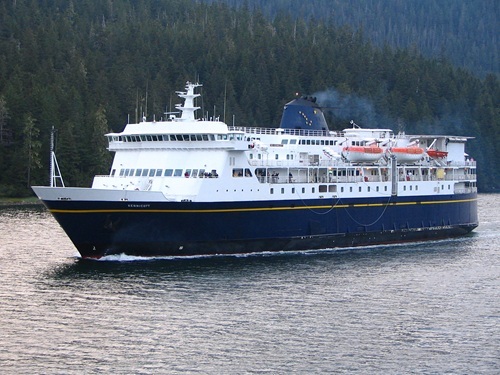
The Alaska Department of Transportation and Public Facilities recently returned the M/V Kennicott to service after completing a $27 million “repower project” to improve the vessel’s reliability, operational efficiency, and long-term service life.
[Above photo by Alaska DOT&PF]
The project – overseen by the Everett Ship Repair facility in Washington State, with critical support from the vessel’s Alaska Marine Highway System (AMHS) crew – replaced the Kennicott’s aging generators with more efficient equipment that reduced fuel consumption while increasing reliability.
Crews also renewed key heating and electrical systems, completed important upgrades to both main engines, repaired the ship’s propulsion shaft, replaced worn-out steel, refreshed protective coatings, improved drainage in problem areas, renewed sections of the vehicle deck, and repainted the vessel from top to bottom.
Together, those improvements strengthened the Kennicott’s ability to operate safely, efficiently, and dependably for years to come.
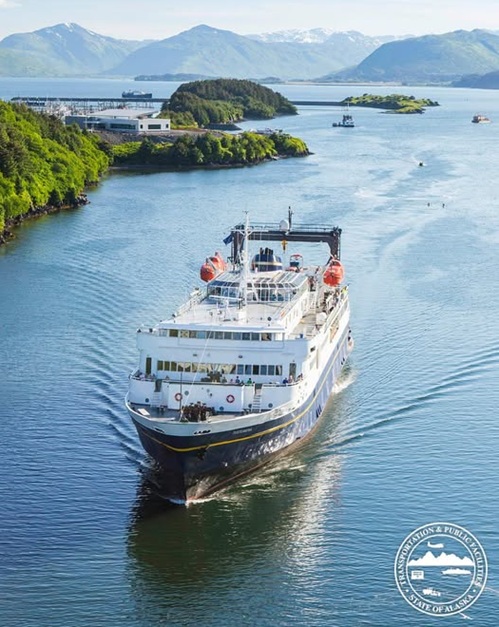
“The Kennicott repower reflects our focus on efficiency that delivers reliability for Alaskans,” said Ryan Anderson, Alaska DOT&PF’s commissioner, in a statement.
[Editor’s note: Alaska DOT&PF is also currently seeking public input on its summer 2026 ferry schedule.]
He added that the Kennicott’s repower project is part of the department’s long-term Alaska Marine Highway System revitalization strategy which emphasizes efficient operations, predictable service, and long-term asset stewardship.
Alaska DOT&PF said its investment plan includes replacing the M/V Tustumena, advancing 12 key terminal and dock projects –
such as the new Cascade Point Ferry Terminal, Cold Bay Dock Replacement, and improvements to Prince William Sound terminal facilities – and continuing customer-service upgrades.
Those system-wide improvements include installing Wi-Fi across the fleet and deploying an upgraded maintenance-management system that improves AMHS scheduling, tracking, and maintenance forecasting needs. Together, those tools will help reduce unplanned maintenance, improve service reliability, and keep vessels operating more consistently, the agency said.
“By investing in modern equipment and smarter maintenance practices, we’re reducing the risk of unexpected outages while making better use of public dollars,” Anderson emphasized. “Alongside major vessel investments, we’re advancing critical infrastructure projects that ensure the Alaska Marine Highway System remains a dependable part of our statewide transportation network.”
 States
Oklahoma DOT Begins $408M Bridge Replacement Project
September 18, 2026 States
